
T: 0086 13510078491
Tianraobu Village, Hengli Town, Dongguan City, Guangdong Province, 523472, China.
Views: 0 Author: Site Editor Publish Time: 2026-08-30 Origin: Site


Scaling a commercial power fleet demands rigorous planning and technical precision. You must balance upfront capital expenditure with long-term operational reliability. Bulk procurement amplifies these challenges significantly. Miscalculating site requirements often leads to stranded assets. Ignoring local regulatory compliance can trigger severe project delays. Failing to audit your supply chains also introduces massive risk to your deployment timelines. You need a reliable framework to evaluate your equipment strategy.
This guide provides a rigorous, evidence-based evaluation framework for procurement teams. It helps you align technical equipment requirements with vendor capabilities and actual project deployment realities. We break down the complex variables involved in large-scale generator acquisitions. You will learn how to profile load demands accurately, customize enclosures for harsh environments, and verify overseas logistics. By following these steps, you will know exactly how to assess hardware quality, audit manufacturing partners, and mitigate operational risks effectively.
Procuring a massive fleet requires deeply analyzing your baseline power needs. You cannot rely on rough estimates when selecting industrial gas generator specifications. Proper sizing dictates the longevity and efficiency of your entire power system.
Engineers must differentiate between running watts and starting surge watts. Heavy motor loads draw significantly more power during startup. You must account for this initial surge. Avoid arbitrary oversizing. Oversized engines run inefficiently and suffer from carbon buildup. Conversely, under-sizing causes severe voltage dips. These dips lead to catastrophic equipment failure across your facility. Analyze your facility's inductive and resistive loads separately. Use precise harmonic analysis to determine your true peak power demand.
You must clarify the operational intent of your fleet. Will the units run constantly, or only during emergencies? Industry standard ISO 8528 defines these operational profiles strictly. Ensure the selected rating aligns perfectly with these standards. This alignment guarantees the engine lifecycle matches your expected load factors.
| Duty Rating (ISO 8528) | Typical Application | Load Characteristics | Annual Run Time |
|---|---|---|---|
| Continuous Power (COP) | Base load utility, Data centers | Constant 100% load | Unlimited hours |
| Prime Power (PRP) | Remote mining, Off-grid sites | Variable load | Unlimited hours |
| Standby Power (ESP) | Hospitals, Commercial offices | Variable load (emergency only) | Max 200-500 hours |
Evaluate your exact site constraints regarding fuel logistics. Natural gas pipelines require specific pressure parameters to feed large engines effectively. You must verify local pipeline delivery capabilities before ordering equipment. If you use propane or LPG configurations, consider the physical storage logistics. Bulk storage tanks require strict zoning approvals. Assess fuel degradation risks if the gas sits unused for extended periods. Natural gas eliminates storage needs but relies heavily on utility grid integrity.
Review the electrical efficiency data meticulously. High-efficiency engines consume significantly less fuel over a ten-year horizon. You should also evaluate thermal output data. Combined Heat and Power (CHP) potential allows facilities to capture waste exhaust heat. They can repurpose this heat for facility warming or cooling operations. Modeling these fuel consumption curves helps procurement teams project accurate long-term operational performance. Always demand empirical performance data from the manufacturer rather than theoretical maximums.
Off-the-shelf solutions rarely satisfy complex industrial requirements. You often need a custom industrial gas generator to meet stringent operational demands. Customization should enhance environmental resilience and system integration.
Assess the absolute necessity for custom-engineered protective canopies. Site zoning laws frequently impose strict acoustic limitations. Facilities near residential areas require heavily sound-attenuated enclosures. Extreme climate conditions dictate specific protective upgrades. Coastal deployments need anti-corrosion marine grade paints. Arctic deployments require heavy-duty cold-weather heating blocks. Desert sites demand advanced sand filtration systems. Always map your canopy design directly to the harsh realities of the installation environment.
| Enclosure Type | Key Features | Best Use Case |
|---|---|---|
| Weatherproof (NEMA 3R) | Basic rain and snow protection, standard ventilation | Moderate climates, industrial zones |
| Sound-Attenuated | Acoustic foam lining, specialized exhaust mufflers | Hospitals, residential borders |
| Extreme Climate | Motorized louvers, marine-grade paint, internal heaters | Coastal, Arctic, or desert regions |
Modern power fleets require sophisticated digital oversight. Specify the exact need for parallel operation capabilities. Paralleling allows multiple units to synchronize seamlessly. This provides built-in redundancy for critical infrastructure. Detail your requirements for automatic transfer switches (ATS). Verify compatibility with your existing Energy Management Systems (EMS). Control panels must support standard communication protocols like Modbus or BACnet. This ensures seamless grid-synchronization and remote diagnostic capabilities.
Determine if specific project sites require specialized electrical components. Standard alternators often fail when handling non-linear loads. Facilities like data centers or telecom hubs generate massive harmonic distortion. You might need custom alternator sizing to absorb these harsh electrical feedbacks. Specialized excitation systems, like Permanent Magnet Generators (PMG), provide superior short-circuit fault clearing. Work closely with engineers to match component modularity to your specific harmonic footprint. This prevents catastrophic breaker trips during transient load spikes.
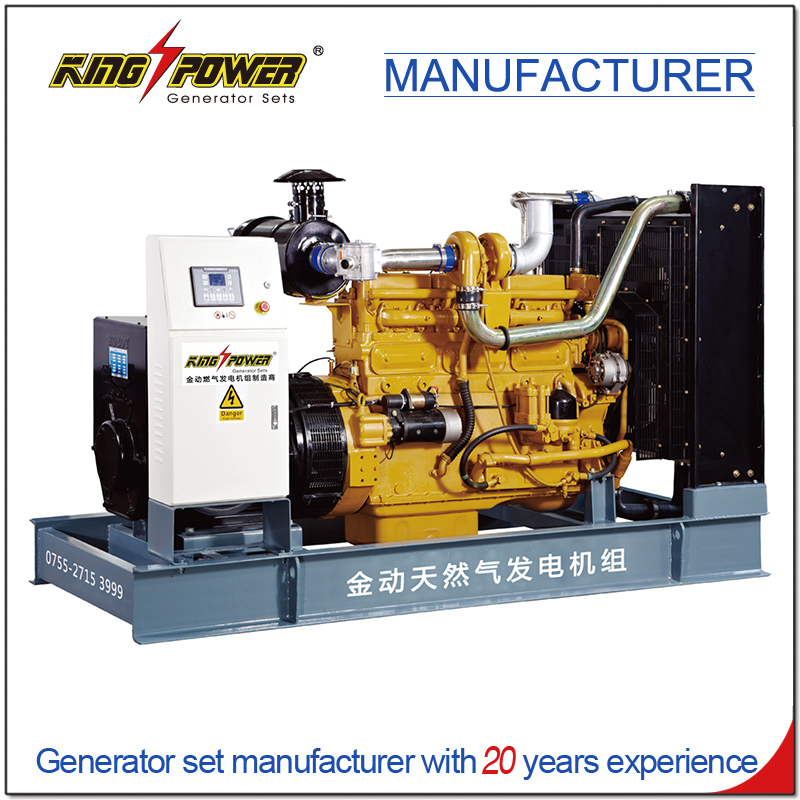
Cross-border power projects introduce severe logistical friction. Moving heavy machinery internationally requires exhaustive planning. A successful overseas projects industrial gas generator deployment hinges on strict regulatory and shipping alignment.
Map the destination country’s regulatory landscape before authorizing production. Environmental agencies enforce strict exhaust limits. Ensure your equipment meets local EPA, Tier 4 Final, or Stage V mandates. Some regions accept older Tier 2 equivalents, while others levy massive fines for non-compliance. You must align on these international emissions standards upfront. Modifying engine emissions hardware after manufacturing is astronomically expensive. Request verified emissions certificates tailored to your exact destination country.
Account for the massive dimensional weight of bulk power machinery. Generators often exceed standard shipping container weight limits. You must plan for specialized heavy-lifting equipment at the destination port. Evaluate international commercial terms (Incoterms) carefully. Decide whether FOB (Free on Board) or CIF (Cost, Insurance, and Freight) serves your risk profile better. Specify the absolute necessity for anti-vibration transit packaging. Ocean freight exposes sensitive control panels to severe dynamic shock. Proper shock-absorbing skids prevent hidden transit damage.
Establish a rigid framework for final installation. Hardware delivery does not equal a functional power plant. Verify if the original equipment manufacturer provides on-site commissioning engineers. Some manufacturers rely entirely on third-party regional contractors. Assess the execution risk associated with each model. OEM engineers understand the proprietary logic boards deeply. Third-party contractors might struggle with custom software configurations. Ensure your contract guarantees boots-on-the-ground support until the final load bank test passes successfully.
A glossy brochure means nothing in industrial procurement. You must interrogate the operational reality of any potential industrial gas generator supplier. Vetting manufacturing partners mitigates catastrophic supply chain failures.
Never accept a generator without documented performance proof. Demand rigorous load-bank testing protocols at the manufacturing facility prior to shipment. A proper FAT subjects the engine to full-rated loads for extended periods. It verifies voltage stability, cooling efficiency, and shutdown safeties. Buyers should always have the option to witness these tests. You can attend in person or request a live virtual broadcast. Ask the supplier to simulate sudden block loads during the test. This proves the engine's transient response capabilities under stress.
Identify the true origin of all critical components. Many assemblers buy generic parts and rebrand them. A reliable supplier will transparently disclose their upstream manufacturers. You need to know exactly who built the engine block. You must verify the alternator manufacturer. You must audit the control logic board origins. Traceability ensures you can secure replacement parts a decade later. Obscured supply chains often lead to impossible maintenance scenarios down the road.
Evaluate the facility's raw production capacity against your rigid deployment timeline. Can they actually output fifty custom units in three months? Clarify their Minimum Order Quantities (MOQs) during early negotiations. Discuss the financial terms for staggered rollout schedules. Bulk buyers rarely want all units delivered simultaneously. You need a supplier capable of warehousing finished goods and staggering international shipments. Ensure they possess the financial stability to float large-scale production cycles.
Scrutinize the fine print of the operational warranty. A ten-year warranty is useless without localized support. Ensure there is a verifiable, fast-response supply chain for consumable parts. You need oil filters, spark plugs, and logic controllers readily available. Check if they stock critical spares in the region where the generators will operate. Ask for service level agreements (SLAs) dictating emergency technician response times. A broken generator costs facilities thousands of dollars per hour in lost productivity.
Narrowing down your vendor list requires a structured methodology. You must evaluate every shortlisted industrial gas generator on long-term performance, not just initial capital outlay.
Compare your final vendors using a comprehensive performance matrix. Ignore the base unit cost temporarily. Focus instead on modeled fuel consumption curves. An engine that burns slightly less gas saves massive capital over twenty years. Compare the mandated maintenance intervals. Engines requiring overhauls every 10,000 hours outcompete those needing service at 5,000 hours. Finally, quantify the logistical overhead. Factor in the cost of shipping, localized technician availability, and customs clearing assistance provided by the vendor.
High-volume orders carry immense financial risk. Never commit to a fifty-unit run blindly. Negotiate terms for a single-unit Proof of Concept deployment first. Install this single generator at a challenging facility. Run it through extreme weather conditions and heavy load profiles. Authorize the full production run only after this PoC unit performs flawlessly for several months. This strategy isolates risk and gives your engineering team hands-on experience with the hardware.
Move from theoretical planning to aggressive vendor qualification immediately. Prompt your engineering team to request comprehensive technical data sheets from the remaining vendors. Ask for standardized FAT documentation examples to verify their testing rigor. Consolidate your site load profiles into a single bidding document. Send this document to your shortlisted suppliers and demand customized performance guarantees. Rigorous upfront demands filter out incapable vendors very quickly.
Successful bulk purchasing mitigates operational risk through stringent specification alignment. You cannot cut corners when procuring massive commercial power systems. Precise load profiling, environmental customization, and deep supply chain auditing remain your best defense against project failure. Uncompromising supplier vetting ensures you partner with reliable manufacturing experts. Procurement teams must prioritize empirical evidence, load testing, and lifecycle maintenance support over initial price discounts. A cheap generator always costs more when it fails during a critical outage. Contact your core engineering team today to conduct a site-specific load analysis. Request a bulk-order consultation with a verified manufacturer to align your technical requirements with global production realities.
A: Lead times vary significantly based on customization. Off-the-shelf configurations typically ship within 8 to 12 weeks. Custom-engineered units requiring specialized acoustic enclosures or advanced EMS integration often take 16 to 24 weeks. Global supply chain bottlenecks can also affect component delivery. Always negotiate delivery schedules directly in the procurement contract.
A: Engines require dense, cool air for optimal combustion. High altitudes provide thinner air, reducing oxygen intake. Extreme heat also decreases air density. Manufacturers apply specific derating factors to compensate for these conditions. A 500kW generator might only output 420kW at 5,000 feet above sea level. Always size equipment based on localized derating curves.
A: Yes, many systems support dual-fuel configurations. They can switch between natural gas and liquid petroleum gas (LPG). This requires specialized carburetors and advanced digital control valves. Dual-fuel setups provide excellent redundancy if pipeline pressure drops. However, they require careful calibration and regular testing to ensure seamless mid-operation fuel switching without dropping the electrical load.
A: Clearing heavy machinery through international customs requires precise paperwork. Standard requirements include detailed commercial invoices and packing lists. You also need verified certificates of origin. Crucially, destination ports demand official emissions compliance certificates matching local regulations. A clean Bill of Lading (B/L) is mandatory to release the equipment from the freight terminal.

