
T: 0086 13510078491
Tianraobu Village, Hengli Town, Dongguan City, Guangdong Province, 523472, China.
Views: 0 Author: Site Editor Publish Time: 2026-09-18 Origin: Site


Buyers often fixate on the initial purchase price of industrial equipment. They easily miss the massive operational costs hidden beneath the surface. Operating expenditure dictates your true financial outcome over a decade. Fuel efficiency does not simply result from basic engine design. It acts as a direct consequence of applied material science. Build materials dictate heat dissipation across the engine block. They control internal friction between rapidly moving parts. They govern component expansion under extreme thermal stress. These physical realities determine a vital ratio. They decide exactly how much natural gas becomes usable electrical output. They also dictate how much becomes wasted thermal energy. This article equips procurement engineers and facility managers with essential knowledge. We outline the exact technical criteria you need today. You will learn how to evaluate material quality properly. This ensures you shortlist the most efficient, durable units for your specific operational needs.
Engine block and cylinder materials dictate thermal retention and friction, heavily influencing baseline fuel efficiency.
Acoustic enclosure materials impact airflow and ambient running temperature; poor thermal management forces the generator to consume more gas to maintain power output.
Precision in fuel delivery systems relies on corrosion-resistant materials (like stainless steel) to prevent fuel-air ratio drift over time.
Evaluating a supplier requires analyzing consumption charts against long-term material degradation curves, not just Day 1 performance data.
Internal combustion requires optimal operating temperatures to function well. Build materials act as the foundation for this critical thermal control. Metals possessing poor thermal conductivity cause a dangerous phenomenon. Engineers call this issue "heat soak." Heat soak traps extreme temperatures inside the engine bay. It drastically reduces air density inside the main engine intake. The engine management system detects this lack of dense oxygen. It forces the engine to burn extra natural gas to compensate. You need this extra fuel just to maintain your baseline kilowatt output.
Internal moving parts constantly generate intense friction. This friction creates severe parasitic mechanical losses inside the engine. The exact hardness of these internal materials dictates the severity of this power loss. Soft metals wear down quickly and drag against each other. Specialized surface coatings further reduce this destructive friction. Less friction means more rotational energy reaches the alternator. You convert more of your purchased gas into usable electricity.
You must evaluate your operating costs over a standard 10,000-hour lifecycle. Minor efficiency drops compound rapidly over these thousands of hours. Fatigue in cheap materials drives up your long-term gas bills silently. A mere two percent drop in combustion efficiency costs thousands annually. When managing gas generator fuel consumption, you must look strictly beyond the initial specification sheet. You must demand long-term material stability from your chosen manufacturer.
Traditional cast iron blocks possess exceptionally high thermal mass. They hold heat for long periods after startup. Modern advanced aluminum alloys perform very differently under load. Aluminum dissipates heat rapidly away from the combustion chamber. Fast heat dissipation lowers the parasitic load on your cooling system. The water pump and cooling fans work less aggressively. A lighter cooling load improves your overall engine efficiency. When buying a natural gas generator set, block material matters immensely for baseline efficiency.
Cylinder liners and piston rings endure extreme physical abuse. Hardened steel alloys provide the necessary durability for these environments. Engineers often apply advanced friction-reducing coatings here. Molybdenum and Nikasil stand out as top-tier choices for industrial engines. Tighter material tolerances prevent dangerous compression loss. Mechanics refer to this compression loss as "blow-by." Zero blow-by ensures maximum energy yield from every cubic foot of gas.
Hardened alloys maintain precise cylinder geometry over thousands of hours.
Nikasil coatings provide a diamond-like surface for piston rings to glide across.
Tighter seal tolerances force all combustion energy downward onto the crankshaft.
Gaskets and seals hold the entire combustion system together. High-grade Viton resists heat deformation beautifully under constant strain. Multi-layer steel (MLS) gaskets prevent vacuum leaks entirely across mating surfaces. Vacuum leaks skew your delicate air-fuel mixture drastically. A skewed mixture spikes your gas usage instantly. Cheap paper or composite gaskets degrade and shrink over time. This shrinkage forces the engine to run artificially rich to prevent stalling.
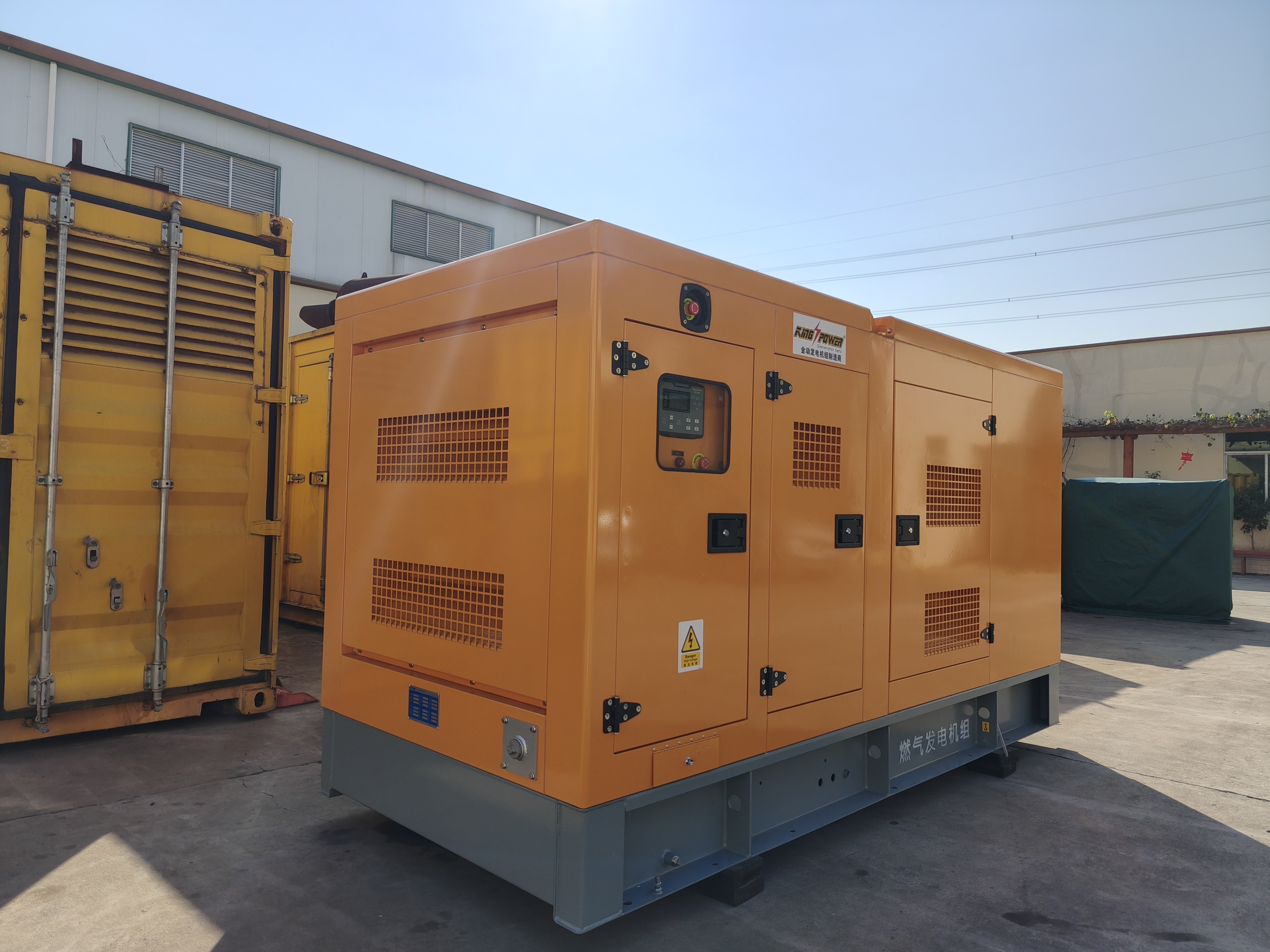
Evaluating a 110kw silent natural gas power generator presents a unique physical challenge. Sound attenuation materials frequently restrict vital airflow around the engine. Buyers want absolute silence, but engines demand massive volumes of fresh air. You must balance acoustic performance against thermal efficiency carefully.
Heavy, non-reflective sound-dampening foam dampens noise extremely well. Unfortunately, it also traps massive amounts of radiant heat. Trapped heat forces the cooling system into immediate overdrive. We suggest looking for aerospace-grade thermal-reflective barriers instead. Powder-coated aluminum enclosures work exceptionally well for this purpose. They deflect radiant heat away from the sensitive intake manifold. They keep the internal ambient temperature manageable during peak summer months.
Efficient combustion relies entirely on intake air density. Cooler intake air remains tightly packed with oxygen molecules. Dense air requires less fuel to produce the necessary explosive force. Proper enclosure materials isolate engine heat away from the air intake path. This physical isolation directly lowers your daily fuel usage. Cheap enclosures bake the intake air, ruining your baseline fuel economy.
Natural gas delivery demands exact pressure regulation at all times. Material expansion ruins this precision almost immediately. Brass, plastic, and low-grade steel expand drastically under high temperatures. They warp during continuous heavy operation cycles. When a pressure regulator warps, it delivers inconsistent fuel volumes. Inconsistent fuel delivery causes power surges and wasteful combustion.
Modern Electronic Fuel Injection requires exceptionally high-integrity components. You should focus specifically on stainless steel injector nozzles. Anodized aluminum throttle bodies also provide excellent dimensional stability. Corrosion-resistant materials prevent dangerous carbon buildup inside the fuel tract. They resist physical deformation over years of harsh service.
Stainless steel prevents moisture in the gas from corroding the injector pintle.
Anodized surfaces resist the abrasive effects of microscopic pipeline debris.
Rigid throttle bodies prevent vacuum leaks around the butterfly valve shaft.
This structural integrity ensures the system adjusts fuel flow accurately. Load changes happen dynamically in real-world facilities. A stable EFI system prevents the engine from running unnecessarily rich during sudden load drops.
You must move confidently beyond Day 1 performance metrics. Initial testing data rarely tells the full operational story. You need to read gas generator fuel consumption specifications through a specific lens. Look closely at the 1/4, 1/2, 3/4, and full load charts. Analyze them explicitly for material longevity and thermal stability.
Beware of the hidden performance degradation curve. Some units show excellent initial efficiency on the showroom floor. However, they use cheaper internal materials to hit a price point. These materials wear down quickly under industrial loads. They lose compression fast as piston rings lose their temper. Your fuel usage can easily increase by 5-10% within the first year. This silent increase destroys your facility operating budget.
Operating Hours | Low-Grade Material Efficiency Loss | Premium Alloy Efficiency Loss | Primary Cause of Degradation |
|---|---|---|---|
1,000 Hours | 2.5% increase in fuel use | 0.2% increase in fuel use | Initial ring seating and minor valve stretch. |
5,000 Hours | 6.0% increase in fuel use | 1.1% increase in fuel use | Gasket shrinkage and throttle body warping. |
10,000 Hours | 12.5% increase in fuel use | 2.5% increase in fuel use | Severe cylinder scoring and injector corrosion. |
Vetting your manufacturing partner requires asking tough technical questions. You must interview your gas generator fuel consumption supplier thoroughly before signing. Ask them specifically about their raw material sourcing practices. Request continuous testing data recorded under high ambient temperatures. Demand written warranties covering explicit thermal degradation limits.
Beware of the false economy inherent in industrial procurement. Let us break down the exact mathematical reality. You might save 15% on your initial purchase price today. This happens when you buy a unit built with subpar metal alloys. However, this often causes a 20% increase in lifetime fuel costs. The initial capital savings disappear quickly into the gas pipeline. You spend the next ten years paying for cheap metal.
Cheap materials cause extensive and unpredictable maintenance downtime. Materials prone to thermal warping require frequent mechanical valve adjustments. You will replace warped oxygen sensors constantly. This interrupts your continuous power supply unexpectedly. Every hour of downtime costs your facility money. Every emergency maintenance visit ruins your quarterly maintenance budget.
Use a strict, engineering-based decision framework during procurement. Require detailed bill-of-materials (BOM) summaries from every bidder. Request these summaries specifically for all high-heat engine components. Do this before issuing any final purchase order.
Verify the exact grade of stainless steel used in the exhaust manifold.
Confirm the presence of MLS gaskets instead of cheap composites.
Check the enclosure specifications for thermal-reflective barrier installations.
Fuel consumption remains an ongoing, dynamic operational metric. It links inextricably to metallurgical choices made during factory manufacturing. Structural design decisions dictate your daily operating expenses for years. A cheaper generator block guarantees higher gas bills down the road.
Align yourself exclusively with engineering-focused manufacturers. They will transparently justify their specific material choices to you. They willingly provide empirical thermal data to prove their efficiency claims. They view fuel economy as a scientific guarantee, not a marketing talking point.
Request detailed, long-term load charts today. Ask your shortlisted vendors for complete material specification sheets. Make your purchase based on proven material science, not just initial capital price.
A: Yes, modern EFI generators adjust fuel flow based on electrical load. However, the accuracy of this dynamic adjustment relies entirely on the structural integrity and thermal stability of the fuel system materials. Warped plastic or low-grade steel parts ruin this precision, forcing the system to over-fuel.
A: High altitudes and extreme temperatures exacerbate material stress significantly. Generators built with inferior cooling materials will suffer higher derating factors. They lose their ability to dissipate heat. This forces the engine to burn more natural gas just to compensate for the resulting power loss.
A: While stainless steel provides excellent long-term corrosion resistance, it retains heat differently than aluminum. Its specific thermal conductivity must be paired with proper internal heat shielding. Without reflective barriers, a stainless enclosure might bake the engine compartment and reduce the crucial air intake density.

