
T: 0086 13510078491
Tianraobu Village, Hengli Town, Dongguan City, Guangdong Province, 523472, China.
Views: 0 Author: Site Editor Publish Time: 2026-08-30 Origin: Site


Procurement professionals face a complex balancing act today. Grid instability threatens continuous operations across many global industries. Tightening environmental regulations restrict traditional equipment usage severely. Volatile fuel prices demand a rapid shift away from default power choices. A robust CNG generator set provides excellent operational predictability. It offers inherent compliance advantages over liquid fuels.
However, selecting the right unit demands strict technical evaluation. Improper sizing can easily jeopardize your critical operations. Mismatched site conditions also create severe financial risks. This guide serves as a rigid evaluation framework. Facility managers and procurement officers can use it daily. We will help you mitigate risk effectively. You will learn how to maximize your return on investment securely. You must navigate load profiling, technical specifications, and infrastructure realities carefully.
Buyers often face a fierce internal debate. They must weigh competing priorities before committing to natural gas. We recommend framing this decision around three core business impacts. You need to understand the true financial and operational differences.
First, consider the initial capital expenditure versus operational costs. A natural gas unit usually requires a higher upfront investment. Engineering the gas train and specialized engine components drives this cost up. However, it delivers significantly lower fuel and maintenance costs over its lifespan. Compare this directly to a standard diesel generator set. Traditional liquid fuel units look cheaper initially. Yet, they carry volatile refueling expenses. Their long-term operational costs often surpass gas alternatives within a few years.
Power Source Comparison Chart
| Evaluation Metric | Compressed Natural Gas (CNG) | Traditional Liquid Fuel (Diesel) |
|---|---|---|
| Initial Capital Expenditure | Higher upfront equipment and installation costs. | Lower initial purchase price. |
| Operational Expenses | Highly predictable, lower long-term fuel costs. | Volatile, subject to market price swings. |
| Fuel Storage | Continuous pipeline feed or secure cylinder banks. | Requires large on-site tanks and regular deliveries. |
| Emissions Profile | Burns clean. Minimal particulate matter. | High NOx and soot. Requires heavy after-treatment. |
Second, evaluate your fuel supply and storage security. Diesel relies heavily on external truck deliveries. Extreme weather or logistical strikes easily disrupt these supply chains. Fuel degradation also ruins stored liquid fuel over time. Conversely, compressed gas utilizes continuous pipeline feeds. You can also utilize secure bulk cylinder storage. This guarantees continuous power availability during regional emergencies. You never have to worry about fuel polishing or microbial growth.
Finally, analyze the emissions and compliance reality. Natural gas inherently meets strict local emission regulations. The combustion process produces significantly lower NOx and SOx. It also generates minimal particulate matter. You rarely need to install expensive exhaust after-treatment systems. Environmental agencies increasingly penalize dirty emissions. Clean burning fuel future-proofs your facility against incoming regulatory fines.
Improper sizing remains the most common procurement error. You must establish rigorous evaluation standards. Guessing your power needs leads to catastrophic failures.
Start by defining your exact operational intent. Equipment ratings fall into three distinct categories: standby, prime, and continuous. A unit rated solely for standby cannot run as a continuous source. It will fail mechanically under constant strain. Legal regulations also prohibit misusing standby units for prime power. You must match the alternator rating to your exact duty cycle.
Next, evaluate the step load capabilities. Generators frequently face sudden power surges. Motor starting currents demand high transient response times. When a large industrial motor starts, it pulls massive inrush current. Your equipment must handle these electrical spikes smoothly. If the unit struggles, voltage drops occur. This damages sensitive facility electronics instantly.
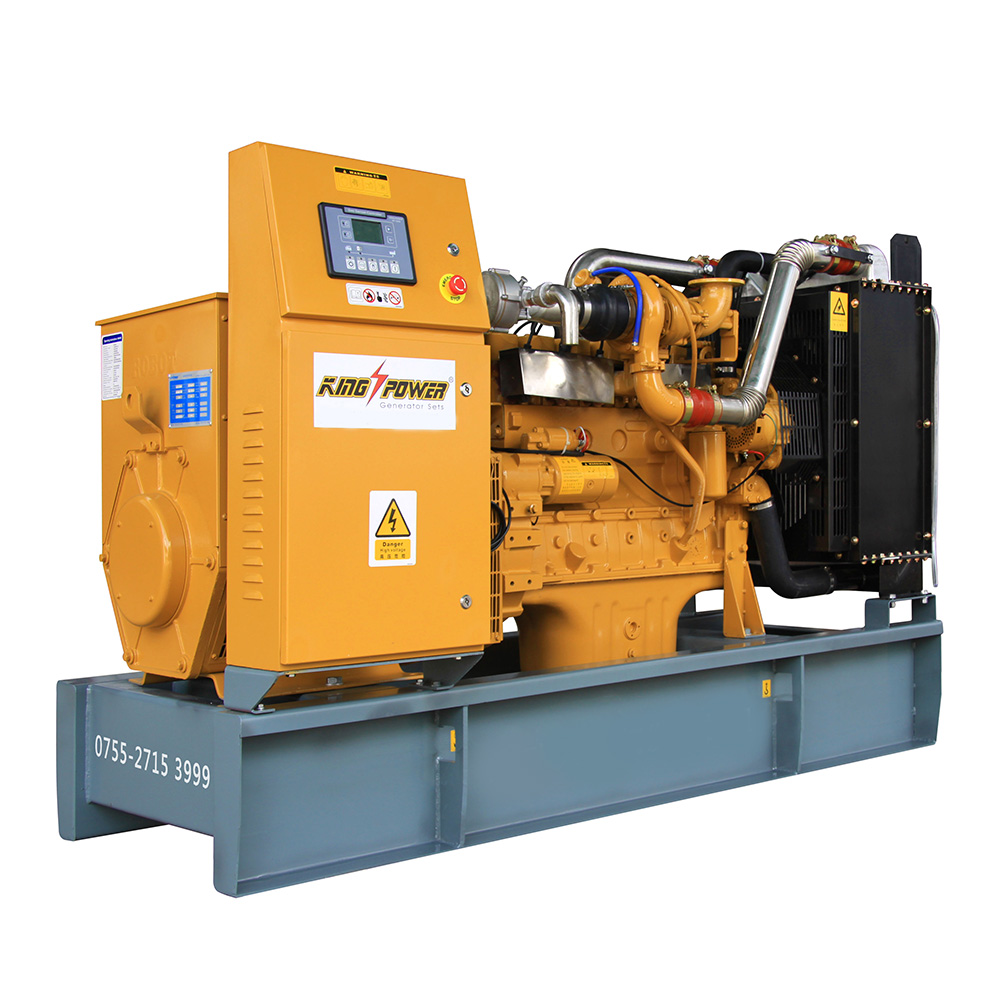
Consider a practical application sizing example. You might evaluate a king power 120kw 150kva natural gas unit for mid-range industrial requirements. You must map specific facility loads precisely. These often include heavy HVAC systems running alongside essential manufacturing lines. You calculate the steady-state running load first. Then, you factor in the peak starting loads of the largest compressors. Proper sizing ensures optimal fuel efficiency. It also prevents harmful carbon buildup inside the combustion chambers.
You need a rigorous technical checklist. It helps you vet manufacturer specification sheets critically. Do not accept marketing brochures at face value. You must inspect the engineering details.
Amateur guides often miss hidden installation challenges. We highlight these physical realities to ensure safe deployments. Your facility infrastructure dictates the project's ultimate success.
Assess your physical footprint and enclosure options first. You must allocate adequate space for maintenance access. Technicians need room to pull filters and inspect wiring. Evaluate weatherproof canopies for outdoor installations. Look for robust sound-attenuated enclosures. Municipalities enforce strict noise ordinances. Always measure acoustic performance in dBA at 7 meters. Poorly insulated enclosures invite neighborhood complaints and regulatory fines.
Address ventilation and thermal management proactively. Gas engines run hotter than their liquid-fueled counterparts. They require massive airflow to prevent overheating. Size your cooling radiators correctly for your specific ambient climate. Desert installations require vastly different cooling packages than coastal sites. Route exhaust pipes carefully to dissipate intense heat safely. Excessive exhaust backpressure chokes the engine and ruins efficiency.
Finally, plan your pipeline and regulator setup thoroughly. Running high-pressure lines requires certified engineering expertise. You must comply strictly with local safety codes and fire marshal regulations. Install sensitive leak detection sensors around the unit. Add automatic shut-off valves to isolate potential gas leaks instantly. Safety infrastructure is never an area for budget cuts.
You must shift focus from the product to the vendor. A rigorous vetting process drives better shortlisting behavior. Even the best hardware fails without competent support.
First, conduct strict service network verification. A CNG generator set supplier is only as good as their Mean Time to Repair (MTTR). Check their local technician availability carefully. Extended downtime destroys your facility's productivity. Ask them how many factory-trained technicians operate within a 50-mile radius of your site.
Question the supplier regarding parts availability continuously. Demand complete supply chain transparency. Ensure they stock critical components domestically. You need immediate access to spark plugs, gas mixing valves, and oxygen sensors. Relying on overseas shipments for basic consumables causes unacceptable delays. A reputable vendor maintains regional parts depots.
Break down the warranty nuances thoroughly. Standard warranties often contain hidden exclusions. Differentiate between parts, labor, and travel costs. Analyze what they cover over the first three years. Some warranties only cover defective parts. They leave you paying thousands of dollars for technician travel time and labor rates.
Ensure they possess true commissioning expertise. Professional load-bank testing is absolutely mandatory. The supplier must perform site-specific gas pressure tuning during installation. They need to simulate a full facility load before signing off. Do not accept a simple "turn the key and see if it runs" approach. Proper commissioning guarantees immediate reliability.
Choosing natural gas power requires precise balancing. You must align your exact electrical loads accurately. You also need to assess your site gas infrastructure thoroughly. Do not rely on estimates. Evaluate long-term financial models rigorously to understand your true operational expenses over the next decade. Remember, successful deployment relies heavily on expert vendor support and strict preventative maintenance.
Take actionable next steps today. Conduct a formal electrical load audit immediately. Consult with a certified electrical engineer to measure your peak starting currents. Request complete lifetime financial models from your shortlisted vendors. Demand detailed preventative maintenance schedules before you ever issue a purchase order. Protect your facility by prioritizing diligent upfront engineering.
A: Lifespan depends heavily on total operating hours and maintenance habits. Most high-quality industrial units run for 10,000 to 15,000 hours before requiring a major overhaul. You must adhere strictly to the manufacturer's recommended maintenance schedules to achieve this longevity.
A: Yes, these units can run continuously during extended outages. However, you must guarantee an uninterrupted gas supply from the municipal pipeline or bulk storage. You also need robust thermal management systems to handle the continuous high-temperature engine operation safely.
A: Yes, the maintenance focus shifts significantly. You completely eliminate the need for fuel polishing and tank cleaning. However, gas engines run hotter and drier. You must perform frequent spark plug replacements. Routine valve lash adjustments are also critically important for reliable operation.

