
T: 0086 13510078491
Tianraobu Village, Hengli Town, Dongguan City, Guangdong Province, 523472, China.
Views: 0 Author: Site Editor Publish Time: 2026-09-30 Origin: Site


Facility managers face a constant procurement challenge. You must balance the carrying costs of spare parts against the catastrophic financial blow of unplanned downtime. When power fails, every second matters. Effective gas generator maintenance requires more than a simple checklist. It demands strategic alignment. You must harmonize Minimum Order Quantities (MOQs) and supplier lead times carefully. Order too much, and capital sits trapped on your warehouse shelves. Order too late, and you risk a facility-wide blackout while waiting on a backordered filter. In this guide, we introduce a proven framework for forecasting your parts procurement. We will show you how to manage supply chain bottlenecks effectively. You will also learn to audit vendor reliability thoroughly. By the end, you will understand how to ensure continuous equipment operation without suffering from excessive inventory bloat.
Forecasting must align with exact operating hour milestones (e.g., 500h, 1000h) rather than arbitrary calendar dates to optimize parts ordering.
Distinguish between high-turnover consumables (viable for high MOQ) and critical, low-failure components (better suited for Just-In-Time delivery or vendor-managed inventory).
Evaluating a supplier requires auditing their localized stock capabilities and SLA transparency, not just their catalog prices.
Overstocking maintenance parts drains capital rapidly. Your operations budget vanishes into warehouse shelves holding idle components. These parts gather dust while your cash flow suffers. Conversely, prolonged outages bring severe operational risks. Waiting for backordered parts halts productivity completely. A facility cannot function without reliable power.
Every industrial facility relies heavily on continuous power. A continuous-duty natural gas generator set burns consumables at a highly predictable rate. This predictability makes erratic ordering patterns completely unnecessary. You know exactly when filters will clog. You can anticipate spark plug degradation accurately. Therefore, you should schedule purchases logically instead of reacting blindly.
Poor lead time planning hides massive financial risks. You might pay exorbitant emergency shipping fees to expedite a single sensor. You could require expensive temporary rental power to keep operations running. Regulatory compliance penalties also threaten your budget during unexpected outages. Hospitals or data centers face severe fines for losing power. By balancing inventory and lead times, you mitigate these hidden dangers effectively. Predictable maintenance turns chaotic emergencies into manageable daily tasks.
Many procurement teams fail to calculate the carrying cost of inventory. Storing parts requires climate-controlled space. It demands insurance coverage. It also risks parts becoming obsolete. If you upgrade your equipment, old parts become worthless. Therefore, managing your warehouse footprint carefully saves substantial money. You must find the precise middle ground. This middle ground protects you from outages while keeping your shelves relatively lean.
Start by translating manufacturer data into a firm procurement timeline. You need clear baseline requirements. Separate truly essential parts from heavily marketed luxury items. Not every recommended add-on guarantees better performance. Focus your budget on critical filters, seals, and ignition components. These baseline requirements form the foundation of your entire purchasing strategy.
Map out your operational milestones clearly. Daily, monthly, and annual run times correlate directly to component wear rates. Tracking hours gives you accurate replacement windows. A 500-hour service requires vastly different parts than a 2000-hour major overhaul. You must build your procurement schedule around these specific milestones. Ignore arbitrary calendar dates. A machine running continuously needs parts much faster than a standby unit.
Adhering strictly to official gas generator maintenance specifications prevents dual risks. First, it stops premature ordering. You avoid buying parts months before you actually need them. Second, it prevents catastrophic part failure. You buy precisely what you need exactly when you need it. This strict adherence removes guesswork from your daily operations.
However, you should apply data-driven skepticism here. Do not blindly trust OEM lifespan claims. Cross-reference their numbers against your site's specific load profiles. Environmental realities alter wear rates significantly. High dust zones choke intake filters much faster. Extreme temperature zones degrade rubber seals prematurely. High humidity can corrode electrical contacts. Adjust your procurement schedule based on real-world conditions. Use your own historical failure data to refine manufacturer recommendations.
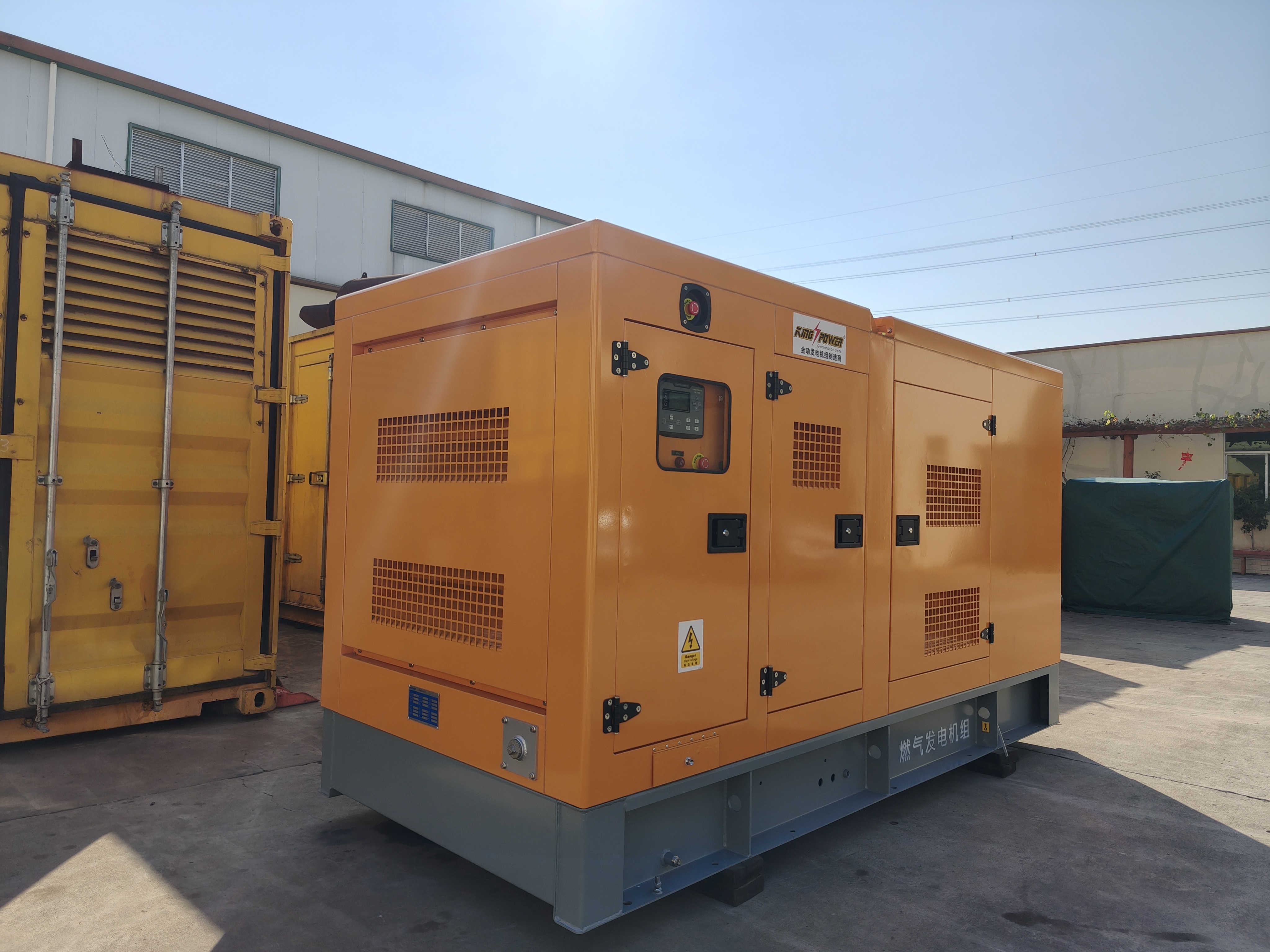
Facility managers must categorize parts intelligently. Structuring Minimum Order Quantity (MOQ) tiers optimizes your warehouse space. It also protects your maintenance budget from unnecessary strain.
Tier 1 (High MOQ / Short Lead Time): Spark plugs, oil filters, air filters. These are safe to bulk-buy due to low carrying costs and high turnover.
Tier 2 (Low MOQ / Long Lead Time): Specialized sensors, control boards, replacement alternators. You should rarely hold these in bulk.
Let us look at a benchmarking example. Consider a standard 110kw silent natural gas power generator as our baseline case study. A single unit requires routine filter changes roughly every 250 hours. If you manage five units, your filter burn rate justifies a high MOQ tier. You will cycle through those filters quickly. Conversely, a main control board rarely fails. Stocking five control boards wastes precious capital. You would tie up thousands of dollars for years.
You must perform a careful cost-benefit calculation. Sometimes you should absorb a supplier's high MOQ requirement. This makes sense for cheap, high-turnover items like gaskets or spark plugs. The volume discount outweighs the storage cost. Other times, you must negotiate split-shipments. Ask your vendor to hold the bulk order in their warehouse. They can ship portions to you quarterly. This strategy preserves your physical space while securing bulk pricing.
Component Type | Typical Failure Rate | Suggested MOQ Strategy | Storage Priority |
|---|---|---|---|
Filters (Air/Oil) | High (Predictable) | High MOQ (Bulk Purchase) | Low (Dry environment) |
Spark Plugs | High (Predictable) | High MOQ (Bulk Purchase) | Low (Small footprint) |
Control Boards | Low (Unpredictable) | Low MOQ (Order as needed) | High (Anti-static, climate control) |
Alternator Parts | Very Low | Low MOQ (Vendor Managed) | High (Requires large space) |
Using this categorization framework prevents procurement chaos. You avoid hoarding expensive electronics. You also ensure mechanics never run out of basic oil filters. Balance is the ultimate goal.
Supply chain delays ruin perfect maintenance schedules. You must establish strict lead time buffers to survive global disruptions. Calculate your "Safety Stock" based on historical supplier delays. Do not rely on optimal promised delivery dates. Suppliers frequently overpromise and underdeliver. You need a realistic buffer zone. If a vendor claims a two-week delivery, plan for four weeks. This pessimism protects your operational uptime.
Synchronizing your labor and parts forms another crucial step. Timing matters immensely in industrial maintenance. Schedule part arrivals one to two weeks before planned service shutdowns. This buffer prevents wasted technician dispatch costs. If mechanics arrive before parts do, you pay for idle time. You also face the nightmare of rescheduling highly specialized contractors. Ensure the parts sit securely in your staging area before anyone touches a wrench.
Develop robust contingency planning immediately. Global supply chain disruptions affect specific gas-powered equipment parts unpredictably. Semiconductor shortages delay control boards for months. Raw material shortages impact specialized gaskets. You must secure secondary suppliers for highly specialized components. Maintain a small reserve of critical sensors locally. Being proactive ensures your power infrastructure never relies on a single fragile logistics link.
Consider establishing local partnerships. Global shipping faces constant threats from port strikes and weather events. A local distributor might cost slightly more upfront. However, their ability to drive a critical part to your facility in two hours is invaluable. Factor this reliability into your overall procurement budget.
Selecting the right partner dictates your procurement success. Your vendor shortlisting logic must move beyond price per unit. Evaluate potential partners based on their inventory localization. Check their historical Service Level Agreement (SLA) fulfillment rates. You need absolute reliability, not just cheap catalogs. A cheap part means nothing if it arrives three weeks late.
Consider these key evaluation dimensions carefully:
Do they offer Vendor-Managed Inventory (VMI) programs?
Do they provide automated replenishment based on your engine hours?
What are their standard emergency response times?
Do they have clear, proven expedited shipping policies?
Ultimately, everything comes down to trust and transparency. A reliable gas generator maintenance supplier acts like a true partner. They will willingly share their own supply chain vulnerabilities. They provide realistic lead-time ranges proactively. Avoid vendors making unverifiable "always in stock" promises. Honest communication prevents unexpected shortages. If a part faces a global backlog, a good supplier warns you months in advance.
Audit their physical capabilities before signing long contracts. Ask to see their warehouse facilities. Verify their stock levels for your specific engine models. Many online vendors dropship from foreign manufacturers. They hold zero physical inventory. Dropshippers cannot support your emergency needs during a crisis. Demand tangible proof of local inventory for your most critical maintenance components.
Optimized MOQ and lead time planning revolutionizes your facility management. It turns maintenance from a reactive emergency into a predictable operational expense. You regain total control over your budget and uptime. Proper forecasting eliminates warehouse bloat while guaranteeing rapid repair capabilities. By aligning parts delivery with exact operating hours, you streamline your entire workflow.
Take action on these strategies today. First, audit your current parts inventory immediately. Identify where capital sits idle on your shelves. Second, compare your existing vendor's lead times against actual usage rates. Spot where shortage risks lie hidden. Finally, reach out to a specialized supplier. Demand a transparent service level agreement tailored to your exact operational hours. These steps will secure your power reliability for years to come.
A: We suggest a 60-to-90-day lead time buffer for major overhaul kits. Do not rely on standard delivery windows for major milestones. Electronic components and specialized gaskets often face longer supply chain delays than basic fluids. Giving yourself three months ensures all niche parts arrive well before the scheduled teardown.
A: This depends entirely on your breakeven point. Bulk buying suits self-maintaining facilities. It works well if you possess ample climate-controlled storage and in-house technicians. Conversely, service contracts transfer the lead-time risk completely. They also shift the carrying cost to the vendor. If storage space is limited, contracts win.
A: Component degradation is a serious reality. While hard metal parts remain similar, specific natural gas sealing components degrade differently. Ignition systems and specialized rubber seals must be stored properly. Hoarding excessive MOQs can easily lead to dry-rotted seals. Always monitor the shelf life of soft parts closely.

