
T: 0086 13510078491
Tianraobu Village, Hengli Town, Dongguan City, Guangdong Province, 523472, China.
Views: 184 Author: Site Editor Publish Time: 2025-12-15 Origin: Site


Selecting the right diesel engine for a generating set is a technical choice that directly affects the reliability, fuel economy, lifespan, and long-term cost of your power system. The diesel engine serves as the core driver of the generator set, and the quality of your decision determines whether your operations run smoothly or face repeated downtime. This guide breaks down every critical factor you must consider, from power requirements and load characteristics to emissions, fuel efficiency, and brand support. Its purpose is to provide a highly practical, deeply focused framework that helps users and businesses choose the correct diesel engine for any application.
Choosing the correct diesel engine begins with a precise understanding of your required output power. A generating set is not selected based on guesswork; the engine must be appropriately sized to match both the running load and any peak or surge demands. Undersizing leads to excessive stress, overheating, carbon buildup, and premature failure. Oversizing wastes fuel, increases cost, and results in wet stacking. Accurate power assessment involves identifying the continuous power (prime or standby rating), evaluating simultaneous load usage, and calculating a margin for future expansion. This section ensures you define your real power requirement before comparing diesel engines.
| Power Rating Type | Description | Best Application |
|---|---|---|
| Standby Power | Available only during outages; no overload allowed | Emergency backup |
| Prime Power | Continuous operation with variable load; 10% overload allowed | Remote sites, daily use |
| Continuous Power | Constant load operation for long periods | Industrial baseline power |
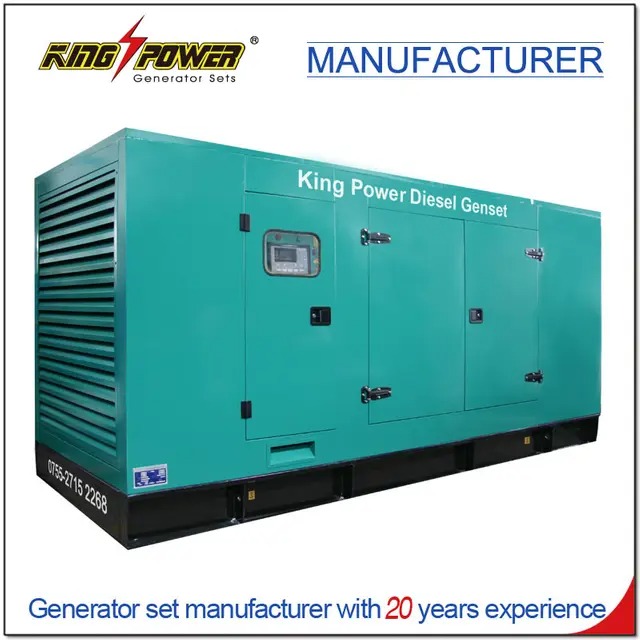
A critical step in choosing a diesel engine for a generating set is carefully analyzing load characteristics. Electrical loads are not uniform; they fluctuate, surge, and respond differently depending on the nature of the equipment being powered. A diesel engine must be matched to the type of load so it can maintain stability, frequency control, and voltage accuracy. For example, motors and compressors require engines with strong torque and high transient response, while data centers rely on engines that support tight frequency tolerances. The duty cycle—whether the generator runs occasionally, daily, or continuously—shapes engine requirements for durability, cooling, and fuel system design.
Performance parameters are the technical backbone of diesel engine selection. Instead of relying solely on brand reputation or price, examine measurable specifications that predict long-term reliability and operational efficiency. Key considerations include torque curve, specific fuel consumption, power density, displacement ratio, and governing system type. Engines with flatter torque curves maintain stability during load fluctuations. Modern electronic governors deliver better voltage and frequency regulation compared to mechanical systems. Additionally, evaluating compression ratio, aftercooling, turbocharging, and lubrication systems ensures the engine can handle continuous loading without overheating or excessive wear. These parameters directly determine how well a generating set will perform in real-world conditions.
| Parameter | Importance | What to Look For |
|---|---|---|
| Torque Curve | Determines performance during sudden load increases | Strong low-end torque |
| Specific Fuel Consumption (SFC) | Affects operating cost | Lower SFC values |
| Governing System | Regulates speed and frequency | Electronic governors |
| Power Density | Size-to-power ratio | Efficient, compact engines |
Not all diesel engines are built to the same standard, even when specifications appear similar on paper. Build quality, internal components, engineering design, and brand reliability play a crucial role in long-term generator performance. Renowned diesel engine brands—such as Cummins, Perkins, Volvo Penta, Yanmar, Weichai, and Doosan—are known for durability, extensive testing, and well-established service networks. When comparing models, pay attention to block material, fuel injection technology, valve configuration, and the reputation of the manufacturer in your region. A well-built diesel engine typically offers longer overhaul intervals, higher efficiency, and greater resistance to extreme environments. Avoid choosing purely on cost; instead, evaluate the engineering pedigree and field performance.
Fuel efficiency is one of the most financially impactful factors when selecting a diesel engine for a generating set. Since gensets often operate for hundreds or thousands of hours annually, even small differences in fuel consumption accumulate into substantial lifetime cost variations. Choosing an engine with optimized combustion, direct injection, and advanced turbocharging reduces fuel waste and operating expenses. Total cost of ownership (TCO) also includes maintenance intervals, spare parts cost, overhaul duration, and potential downtime. An initially cheaper engine may become more expensive over time if it consumes more fuel or requires frequent repairs. Evaluating TCO helps ensure that your diesel engine investment remains cost-effective throughout its lifespan.
Environmental regulations have become central to diesel engine selection for generating sets. Depending on your location, you may be required to comply with emissions standards such as EPA Tier levels, EU Stage V, or regional government rules. These standards regulate pollutants including NOx, PM, HC, and CO. Engines with modern emissions controls—like EGR systems, DPF filters, SCR technology, and advanced fuel injection—produce cleaner exhaust while maintaining performance. Choosing an engine that meets or exceeds emissions requirements avoids legal issues, fines, and retrofit costs. Furthermore, compliant engines usually offer improved fuel efficiency due to more precise combustion technologies. This makes emissions compliance both a regulatory and economic advantage.
A diesel engine is only as reliable as the support system behind it. Generating sets often operate in demanding environments where downtime can be costly or dangerous. Choosing an engine manufacturer with an extensive support network ensures timely maintenance, easy access to spare parts, and technical assistance whenever needed. Consider availability of service centers, reputation of local dealers, training of technicians, and warranty policies. Many well-established brands offer digital monitoring tools, remote diagnostics, and predictive maintenance alerts. Engines lacking reliable support may seem cheaper initially but cause prolonged downtime and costly repairs. Strong after-sales support significantly enhances the lifespan and operational reliability of your diesel engine.
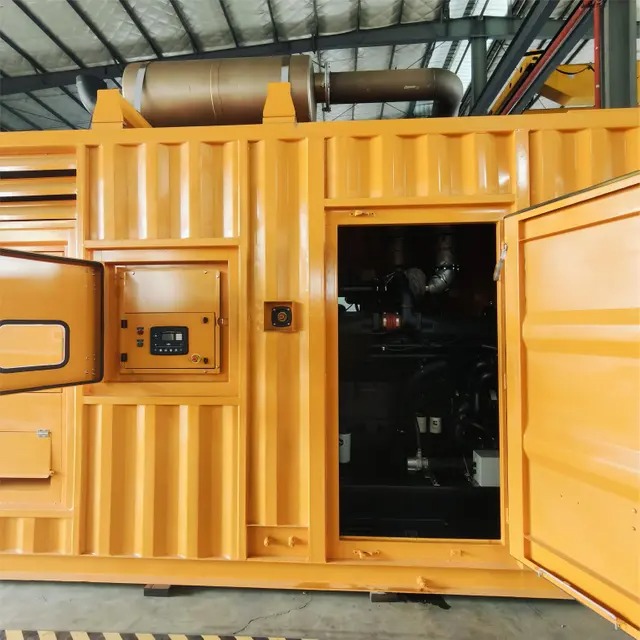
Different applications impose different technical demands on a diesel engine. Emergency backup generators for hospitals require engines with rapid start capability and stable frequency control. Construction sites need rugged engines with high tolerance for dust and variable loads. Data centers require engines with precise synchronization compatibility and minimal harmonic distortion. Marine and remote mining applications require high corrosion resistance, enhanced cooling systems, and extended maintenance intervals. Choosing a diesel engine that is specifically engineered for your operational environment ensures stability, longevity, and efficiency. Carefully match engine speed (1500/1800 rpm), cooling system type, control interface, and enclosure compatibility to your application profile.
Choosing the right diesel engine for a generating set is a strategic technical decision that affects performance, fuel economy, environmental compliance, and total ownership cost. By focusing on power requirements, load characteristics, performance parameters, brand reliability, fuel efficiency, emissions standards, and after-sales support, you ensure your generating set remains dependable and cost-effective for years. A well-selected diesel engine provides stable operation, long service life, and optimal performance under all operating conditions. Make each decision based on data, real-world requirements, and long-term goals to achieve the best outcome for your power system.
1. What is the most important factor when choosing a diesel engine for a generating set?
The most important factor is accurate power requirement assessment. Undersizing or oversizing will lead to performance issues and increased operating costs.
2. Is brand important when selecting a diesel engine?
Yes. Reliable brands offer better engineering, longer life, and stronger after-sales support, which directly impacts long-term generator uptime.
3. How does fuel efficiency affect generator operating cost?
Fuel consumption accounts for the majority of lifetime operational costs. Even small differences in SFC can significantly impact annual fuel expenses.
4. Should emissions compliance affect my engine choice?
Absolutely. Selecting an engine that meets local emissions standards prevents legal issues and often improves fuel efficiency due to advanced combustion design.
5. How do I know if an engine is suitable for my application?
Match the engine’s technical features—such as torque, rpm, cooling system, and governing system—to the environmental and operational demands of your application.

