
T: 0086 13510078491
Tianraobu Village, Hengli Town, Dongguan City, Guangdong Province, 523472, China.
Views: 0 Author: Site Editor Publish Time: 2026-06-29 Origin: Site


Converting organic waste into reliable onsite power requires aligning your available feedstock with the correct engine technology. You cannot afford to guess during this critical planning phase. A mismatch leads to engine fouling, excessive downtime, and broken operational models.
While both biogas and biomass systems turn organic matter into combustible gas, the chemical processes are fundamentally different. The generator sets built to handle them also vary drastically in design. Understanding these nuances separates a highly efficient energy asset from a constant maintenance headache.
This guide breaks down the technical differences, implementation realities, and evaluation criteria between biogas and biomass gas gensets. You will learn how to match your feedstock to the right technology. We aim to help facility managers and project developers make an evidence-based procurement decision.
The fundamental divide between these two power generation methods lies in how we extract gas from organic matter. You must understand the chemistry to select the right engine equipment. The gas generation process dictates the fuel composition. This composition directly impacts engine design, timing, and combustion parameters.
Biogas production relies on nature. It operates on gas produced by anaerobic bacteria breaking down organic matter in an oxygen-free environment. This biological process happens inside sealed digester tanks over several weeks. The result is a highly combustible gas.
A standard biogas generator set runs on a methane-rich fuel. This gas typically contains 50% to 65% methane (CH4). The remainder consists mostly of carbon dioxide (CO2) and trace impurities. Because the methane content remains relatively stable, the gas yields a predictable heating value. Engines designed for this fuel function similarly to natural gas engines, though they require hardened components to resist acidic corrosion.
Biomass gasification utilizes extreme heat rather than bacteria. It operates on synthesis gas (syngas) created by heating solid organic matter with limited oxygen. This process prevents full combustion. Instead, it breaks the solid fuel down into a volatile gas. The thermal reaction happens quickly, usually in minutes.
A biomass gas genset handles a highly complex fuel. It produces a lower-caloric-value gas relying on carbon monoxide (CO) and hydrogen (H2) for combustion. Syngas contains very little methane. This lower energy density drastically alters how the engine must breathe and burn fuel. It requires specific engine timing and precise air-to-fuel ratio controls. The unique combustion properties of syngas demand an engine mapped specifically for hydrogen-rich environments.
You cannot force an incompatible waste stream into a gas generator system. The physical state of your organic material dictates your technology path. Moisture content serves as the ultimate deciding factor.
Anaerobic digestion thrives in water. The bacteria need a liquid medium to move, feed, and reproduce. If your facility produces wet sludge or slurry, biological digestion is your primary option. Implementing a farm biogas genset makes sense when you have a steady supply of liquid waste.
Ideal Feedstock: Liquid or high-moisture organic waste. Moisture content typically exceeds 60%.
Examples: Animal manure, municipal wastewater sludge, food processing slurry, and agricultural liquid runoff.
Limitation: This path requires large, climate-controlled digester tanks. You must maintain continuous biological management. If the temperature drops or toxins enter the tank, the bacteria colony can die. Restarting the biological process takes weeks.
Gasification requires dry material. Introducing water into a gasifier destroys the thermal reaction. The system expends all its energy boiling water instead of creating combustible gas. If your waste is dry and fibrous, gasification is the correct route.
Ideal Feedstock: Dry, solid, lignocellulosic materials. Moisture content must typically remain under 20%.
Examples: Wood chips, forestry residue, nut shells, rice husks, and solid municipal waste.
Limitation: Gasifiers remain highly sensitive to moisture. Wet feedstock dramatically lowers gasification efficiency. It also increases tar production, which risks severe engine damage. You will likely need upstream drying equipment to prepare the fuel.
| Feedstock Attribute | Biogas Systems | Biomass Gas Systems |
|---|---|---|
| Moisture Tolerance | High (60% to 90%+) | Low (Ideally < 20%) |
| Material Structure | Slurry, liquid, soft organics | Solid, woody, fibrous |
| Reaction Speed | Weeks (Biological digestion) | Minutes (Thermal conversion) |
| Pre-treatment Needs | Maceration, liquid mixing | Drying, chipping, sizing |
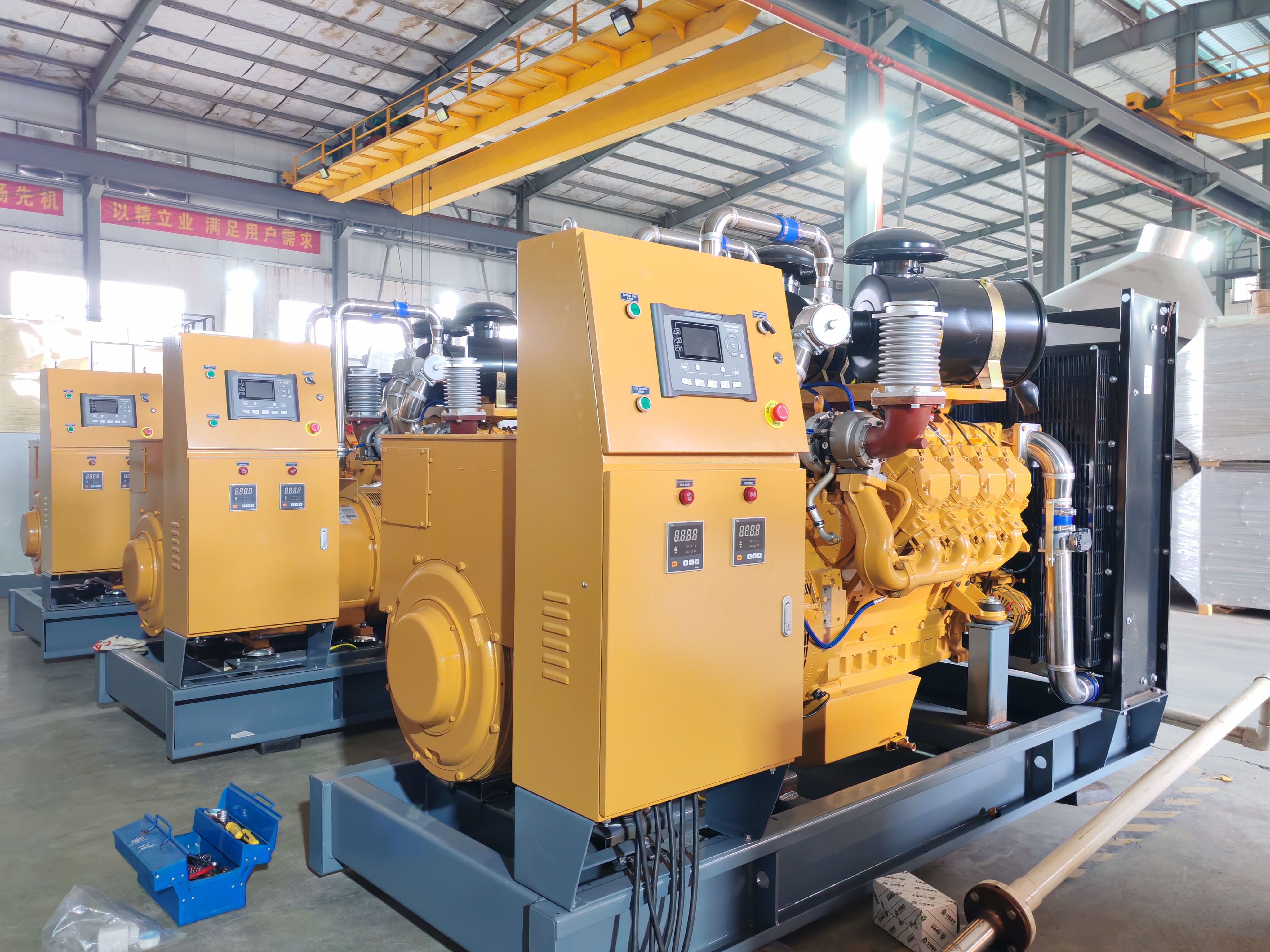
Generating the gas only represents the first half of the process. Preparing that gas for an internal combustion engine is where most projects succeed or fail. Raw biogas and raw syngas are incredibly dirty. You cannot pipe them directly into an engine without risking catastrophic failure.
Engine failures rarely happen due to mechanical defects. They happen because operators feed contaminated gas into the cylinders. Each gas type presents unique chemical dangers.
Biogas Risks: Raw biogas carries high levels of Hydrogen Sulfide (H2S) and siloxanes. H2S is highly corrosive. If not scrubbed out, H2S turns into sulfuric acid during combustion. This acid rapidly eats through engine bearings, cylinder liners, and exhaust valves. Siloxanes present another threat. Found often in wastewater and landfill gas, siloxanes turn into a hard silica (glass-like) crust inside the combustion chamber. This leads to severe engine scoring.
Biomass Gas Risks: Syngas inherently carries tar and fine particulate matter. Tar acts like a sticky glue inside an engine. A biomass gas generator set must be paired with robust thermal cracking or multi-stage filtration. If tar slips past the scrubbers, it coats the intake valves. The engine valves will stick open, leading to piston collisions and total engine destruction. Particulates also bypass standard air filters, acting like sandpaper on the cylinder walls.
The energy density of your fuel directly impacts the electrical output of your generator. Generators operate differently depending on the specific gas mixture they consume.
Biogas engines generally offer higher electrical efficiency. This stems from the stability and higher energy density of methane. Because methane packs more energy per volume, the engine can achieve its full rated output with a standard displacement configuration. The combustion process is smooth, predictable, and highly efficient.
Biomass gensets face a different physical reality. They often require derating, meaning they run below their maximum nominal capacity. This is due to the lower energy density of syngas. Carbon monoxide and hydrogen do not carry as much energy as methane. To generate the same kilowatt output as a biogas system, a syngas engine requires a larger cylinder displacement to draw in more fuel volume per stroke. Furthermore, the high hydrogen content in syngas burns very quickly. Operators must retard the engine timing to prevent pre-ignition (engine knock), which slightly reduces overall mechanical efficiency.
Designing a power generation facility requires looking beyond the engine block. The upstream infrastructure dictates your physical footprint and daily operational schedule. A comprehensive plan must account for heavy equipment handling, biological oversight, and rigorous maintenance routines.
Biogas projects require massive physical footprints. The digester tanks must hold enough organic matter to support weeks of biological retention time. A commercial facility might need several acres of land just for the concrete tanks, mixing pits, and gas storage bladders. The actual generator set is relatively standardized and compact, but the supporting liquid infrastructure is immense.
Biomass gasification requires a smaller physical footprint but demands high vertical clearance. The gasifier unit is highly engineered and tightly packaged. However, the system requires complex material handling conveyors, fuel hoppers, and intensive tar-removal equipment. The gas train leading from the gasifier to the engine involves multiple stages of wet scrubbers, dry filters, and chillers.
Your maintenance team must adapt to the specific demands of the chosen system. Routine upkeep looks drastically different for thermal versus biological plants.
Evaluate the maintenance intervals strictly. Biomass gas systems typically require more frequent physical interventions. Operators must perform routine filter changes, spark plug replacements, and valve inspections due to syngas impurities. Cleaning the tar scrubbers and managing the resulting hazardous wastewater demands significant daily labor.
Biogas systems demand less mechanical intervention but require continuous biological monitoring. Operators function more like chemists. They must monitor pH levels, temperature, and feeding rates. If the methanogen bacteria die due to a sudden temperature drop or an acidic shock, fuel production stops completely. Rebuilding the bacterial colony can take over a month, during which the generator sits idle.
When calculating the net energy output of your facility, you must account for parasitic loads. The system consumes a portion of its own generated power just to operate.
Factor in the energy required for feedstock pre-treatment. For a biomass system, running a wood chipper and a rotary dryer consumes substantial electricity. For a biogas facility, macerating food waste and continuously running large liquid agitators in the digester tank draws significant power. You must subtract these parasitic loads from the engine's gross output to determine the true energy yield of your waste to energy generator.
Making the final equipment decision requires a structured approach. Do not let technology bias drive your choice. Follow these logical steps to match your facility's reality with the correct engine architecture.
Converting organic waste into power requires respecting the chemistry of the gas. Neither technology is inherently superior to the other. Their viability is strictly dictated by the feedstock state—specifically wet versus dry—and the facility's tolerance for gas-cleaning maintenance.
Biogas engines offer steady, efficient power but require vast liquid infrastructure and careful biological oversight. Biomass engines turn dry waste into immediate power but demand rigorous gas filtration to prevent tar damage.
Before issuing a Request for Proposal (RFP) for a generator, commission a comprehensive feedstock laboratory analysis. Determine the exact moisture content, energy potential, and expected contaminant loads. Use this empirical data to guide your engine selection, ensuring decades of reliable, onsite power generation.
A: No, not without significant modifications. Natural gas engines require different air-fuel mixers, lower compression ratios, and hardened valves. Standard engines cannot handle the corrosive contaminants, high hydrogen levels, and lower energy density inherent in renewable gases. Using an unmodified engine leads to rapid failure.
A: Per cubic meter, biogas contains more energy due to its high methane content. It burns more efficiently than biomass syngas. However, total power output depends entirely on the volume of feedstock processed and engine sizing. Syngas engines require larger displacements to match biogas output.
A: Extremely clean. Syngas must undergo aggressive scrubbing. Tar content must typically be reduced to below 5-10 mg/Nm³, and fine particulates must fall below 50 mg/Nm³. Failing to meet these strict cleanliness standards results in sticking engine valves, rapid cylinder degradation, and catastrophic failure.

