
T: 0086 13510078491
Tianraobu Village, Hengli Town, Dongguan City, Guangdong Province, 523472, China.
Views: 0 Author: Site Editor Publish Time: 2026-09-26 Origin: Site


A parallel gas generator system provides exceptional power redundancy. It scales effortlessly to meet heavy industrial demands. However, these benefits vanish if you neglect routine upkeep. Unplanned downtime rarely happens because an engine suddenly fails. Instead, critical disruptions often stem from ignored control cabinets. Undetected gas line pressure drops cause major operational headaches. Load-sharing imbalances can quickly cascade into full facility blackouts. Reliable operation requires rigorous attention to synchronization logic and fuel systems.
You must implement a proactive maintenance strategy. Proactive care ensures continuous uptime and protects your hardware investment. We will explore how aligning your routines with specific system guidelines prevents catastrophic failure. You will learn the exact mechanical and digital tasks necessary for seamless power continuity. Facility managers can use this guide to establish resilient, predictable maintenance schedules.
Parallel setups require dual-track maintenance: mechanical upkeep of the engines and precise calibration of the synchronization infrastructure.
Preventative maintenance on a natural gas generator set minimizes localized fuel-line risks and optimizes combustion efficiency.
Reviewing parallel gas generator system specifications is critical to establishing an accurate, usage-based maintenance schedule.
Selecting a technically competent parallel gas generator system supplier guarantees access to OEM parts, specialized diagnostics, and reliable Service Level Agreements (SLAs).
Modern facilities rely on stable power grids. You cannot afford unexpected outages in critical operations. Operational success relies on defining reliability in concrete terms. Mean Time Between Failures (MTBF) serves as a primary metric. High MTBF indicates a healthy, well-maintained infrastructure. Fuel efficiency under variable loads also determines system success. Properly serviced engines consume less gas during load fluctuations. Seamless grid-to-generator transitions define actual reliability. A slight delay in switching can corrupt data or damage sensitive machinery.
Reactive maintenance destroys budgets. You might save money by delaying a scheduled service. However, emergency repair costs compound rapidly. You pay premium rates for rush parts and weekend technician labor. Facility downtime adds massive indirect costs. Predictable operational expenditures (OPEX) keep budgets stable. Scheduled servicing allows you to plan your financial outlays accurately.
Parallel configurations introduce unique vulnerabilities. Multiple generators must talk to each other seamlessly. If load shedding protocols malfunction, you face cascading failures. One engine drops off, forcing the remaining engines to absorb the sudden load. They overheat and shut down in sequence. Proactive maintenance mitigates these specific network risks. You secure your entire power chain by checking the interconnectivity.
Table 1: Operational Impact of Maintenance Strategies
Maintenance Approach | Cost Predictability | Downtime Risk | Equipment Lifespan |
|---|---|---|---|
Reactive (Run-to-Fail) | Highly volatile | Severe | Significantly reduced |
Proactive (Scheduled) | Stable and budgetable | Minimal | Optimized |
Predictive (Condition-Based) | Moderate upfront, low long-term | Nearly eliminated | Maximum extension |
The mechanical health of your engines forms the foundation of reliability. Natural gas behaves differently than diesel. It requires specific handling and maintenance routines. A natural gas generator set demands precise fuel management and combustion timing.
Gas supply lines dictate engine performance. Technicians must check natural gas regulators and valves frequently. Micro-leaks pose serious safety hazards and reduce efficiency. Pressure fluctuations cause erratic engine speeds. You must ensure supply lines remain perfectly sealed. Validating fuel purity is equally important. Contaminants in the gas line foul internal engine components. Flow rates must match dynamic load demands exactly. A starved engine will stall when load-sharing shifts power its way.
Gas engines generate immense heat during combustion. Spark plug wear happens predictably based on run hours. Replacing them prevents misfires and wasted fuel. Ignition system timing requires regular calibration. Even a slight timing delay reduces power output drastically. Technicians must perform valve lash adjustments specific to gas engines. Tight valves burn out, while loose valves decrease compression.
Exhaust systems also need careful inspection. Emissions compliance checks keep you within legal environmental limits. Exhaust manifolds expand and contract repeatedly. They often develop hairline cracks over time. Inspecting them prevents dangerous exhaust gases from entering the facility.
Heat and friction destroy engines quietly. You must monitor lubrication quality constantly. Routine oil analysis detects early engine wear. High metal particulate counts indicate bearing or ring damage. By catching this early, you avoid complete engine replacements.
The cooling system prevents thermal breakdown. Peak load sharing pushes engines to their absolute thermal limits. Below are common preventative actions for cooling and lubrication:
Perform annual coolant system flushes to remove scale buildup.
Inspect all radiator hoses for dry rot or cracking.
Test coolant block heaters before the winter season begins.
Check oil filters for excessive sludge accumulation during every service interval.
Verify the function of automatic oil make-up systems.
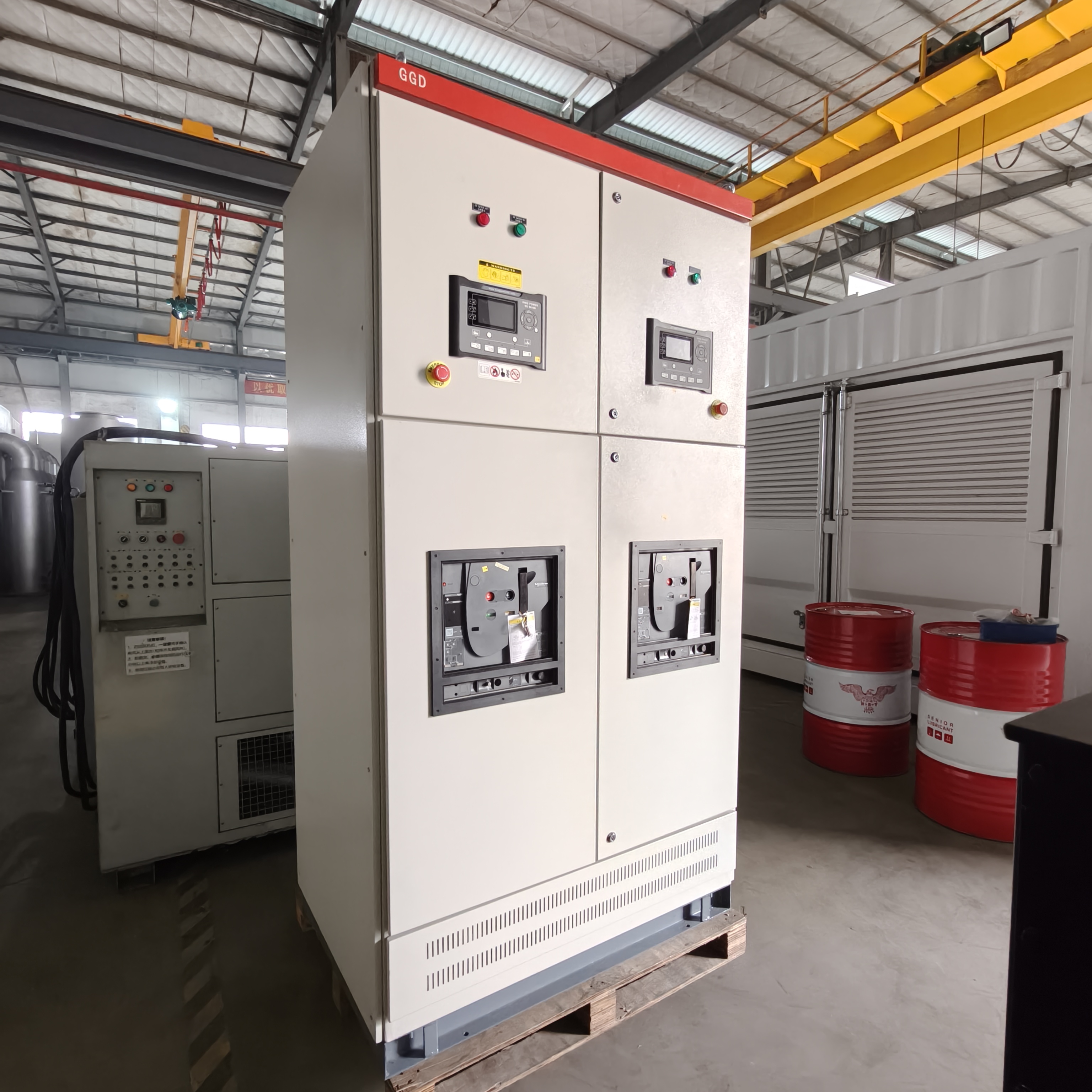
Mechanical engines produce raw power. Digital controllers direct that power safely. The synchronization infrastructure requires specialized, meticulous care. It dictates how multiple machines act as one cohesive unit.
The Programmable Logic Controller (PLC) governs the entire operation. You must test the PLC regularly to guarantee seamless operation. Load-sharing modules ensure no single unit carries an excessive burden. Technicians simulate grid failures to test this logic. They verify that generators split the facility load equally. Simulating the parallel bus synchronization is crucial. The system must match voltage, frequency, and phase perfectly before closing the breaker. A mismatch causes severe electrical arcing or mechanical damage to the alternator.
Physical connections in the electrical panels loosen over time. Engine vibrations travel through the wiring runs. Technicians use specialized tools to inspect the panels. When they open a generator synchronization parallel control cabinet for safety checks, they clean all dust and debris. Dust accumulation causes catastrophic arc flashes.
Thermographic scanning identifies hidden problems. Infrared cameras spot hot spots and loose connections instantly. You must also exercise motorized breakers annually. If left stationary for years, their mechanical lubricants harden. The breaker binds and fails to close during an actual emergency.
Digital controllers run on specialized software. Manufacturers release updates to fix bugs and improve algorithms. Updating firmware secures the control system against digital vulnerabilities. It also optimizes load shedding and adding protocols. Outdated software often leads to delayed response times. You must treat controller firmware like any other critical IT infrastructure.
Every facility has a unique operational profile. A generic maintenance schedule rarely works well. You must tailor your servicing to match the original equipment guidelines.
You cannot base maintenance strictly on calendar dates. Run-hours dictate actual wear and tear. You must translate OEM parallel gas generator system specifications into practical site intervals. Prime power applications require monthly intensive checks. Continuous duty engines might need oil changes every few weeks. Standby systems run rarely but require rigorous testing to ensure readiness. Review your usage logs monthly. Adjust your maintenance intervals based on actual engine deployment.
Chart 1: Basic Usage-Based Maintenance Framework
Application Type | Run-Hour Threshold | Primary Maintenance Focus |
|---|---|---|
Standby Power | 0 - 50 hours/year | Battery health, fluid leaks, exercise runs |
Prime Power | 500 - 1,500 hours/year | Valve adjustments, oil changes, spark plugs |
Continuous Power | 1,500+ hours/year | Complete overhauls, alternator rewinding, PLC tests |
Parallel grids grow alongside facility demands. Adding or removing generator nodes changes the network dynamics. You must adjust your maintenance protocols accordingly.
Update PLC logic to recognize the new generator node immediately.
Recalibrate load-shedding parameters to account for the increased total capacity.
Perform a full-load bank test across the entire updated network.
Revise the master maintenance schedule to include the new engine's specific intervals.
Regulatory bodies enforce strict emissions and safety rules. Your system must remain aligned with local electrical codes. Gas engines face rigorous environmental audits. Proactive maintenance guarantees you pass these inspections. Clean spark plugs and correct valve timing reduce harmful exhaust output. Keeping meticulous maintenance records proves your compliance to auditors.
Hardware purchases represent only the beginning of your journey. Long-term reliability depends heavily on your service partner. Choosing the right vendor protects your daily operations.
A supplier's post-installation support dictates your actual downtime risk. You need a rock-solid Service Level Agreement (SLA). The SLA guarantees emergency response times. It outlines exactly when technicians will arrive during a blackout. Evaluate the SLA just as carefully as the initial hardware cost. A cheap installation often hides poor post-sale support.
Gas engines require specialized knowledge. You must assess the supplier's diagnostic experience with parallel grids. Diesel technicians often lack the nuanced skills needed for gas synchronization. Ask about their inventory levels for critical components. A great parallel gas generator system supplier stocks sync controllers, specialized gas regulators, and OEM replacement boards locally. Waiting six weeks for a proprietary controller board leaves your facility vulnerable.
Modern service partners use telemetry to watch your equipment. Remote monitoring provides predictive maintenance alerts. The supplier receives a notification if oil pressure drops slightly. They can log into the control cabinet remotely to diagnose the issue. This technology reduces unnecessary site visits. It catches anomalies weeks before they trigger a mechanical shutdown.
During the procurement phase, demand transparency. Request redacted maintenance records from their other clients. Ask for SLA templates upfront. Compare their guaranteed response times against your facility's acceptable downtime limits. Verify their technicians carry current OEM certifications.
Reliable operation of a parallel power network is never a set-it-and-forget-it deployment. It demands continuous mechanical upkeep and rigorous digital synchronization. Ignoring either aspect invites catastrophic failure. You must balance engine servicing with switchgear thermography and software updates. Using precise OEM specifications ensures your efforts yield maximum uptime.
We encourage procurement and facility managers to act immediately. Audit your current maintenance SLAs today. Identify any gaps in your synchronization testing protocols. Schedule a technical consultation with a verified supplier to review your system specifications. Taking these steps guarantees your power infrastructure remains resilient, efficient, and ready for any emergency.
A: Monthly visual and operational checks are mandatory. Technicians look for leaks, test batteries, and verify fluid levels. Intensive servicing depends on run-hours. Standby systems typically require a comprehensive semi-annual or annual service. Prime or continuous engines need full oil changes, valve adjustments, and spark plug replacements every 500 to 1,500 hours.
A: The most frequent issues are digital and electrical. Sensor drift causes the PLC to miscalculate loads. Loose communication bus wiring disrupts the signal between panels. Finally, motorized breaker fatigue prevents the system from physically connecting to the main power bus during transitions.
A: Your system's size and required redundancy levels dictate maintenance frequency. High-capacity continuous systems require more labor and consumable parts. Additionally, strict environmental emissions tiers mandate specialized testing and calibration tools, which increases the complexity and cost of scheduled servicing.
A: First, ask for their guaranteed emergency response time in your specific region. Second, inquire about their remote diagnostic capabilities and telemetry integration. Third, demand proof of local OEM part availability, specifically for high-failure items like synchronization modules and gas regulators.

