
T: 0086 13510078491
Tianraobu Village, Hengli Town, Dongguan City, Guangdong Province, 523472, China.
Views: 0 Author: Site Editor Publish Time: 2026-09-14 Origin: Site


Accepting a generator based solely on its quoted capacity represents a critical procurement stage. You simply cannot afford to make assumptions here. Relying on a glossy marketing brochure often invites severe trouble. A basic nameplate rating provides a baseline, but it rarely guarantees real-world performance. Failing to verify the true operational capacity can lead to catastrophic facility downtime. You might void expensive warranties or create severe safety hazards on your site.
We designed this guide to help you navigate this complex handover process safely. You need empirical data before signing any final documents. We will provide a highly technical, evidence-based framework for facility managers and buyers. You will learn how to independently verify equipment capabilities under actual load conditions. By following these steps, you protect your infrastructure and ensure reliable emergency power.
You must understand the exact operational definitions governing your equipment. The ISO 8528 standard classifies output into three main rating classifications. Standby power applies only to emergency situations during utility outages. Prime power allows for unlimited run hours but requires variable loads. Continuous power delivers a constant, unvarying load for an unlimited duration. Mixing these up invites severe mechanical failures.
A massive mismatch risk exists in industrial applications. You might mistakenly run a standby-rated unit in a prime power application. This error rapidly accelerates premature engine wear. It will almost certainly void your manufacturer warranties. Standby units simply lack the robust cooling and structural tolerance required for non-stop, heavy-duty operation.
Different fuel types react uniquely to load variations. You must address these fuel-specific behaviors during procurement. For example, operating a diesel generator set requires strict minimum load management. Running it below 30% capacity causes wet stacking. Unburned fuel and soot accumulate in the exhaust system. This carbon buildup severely degrades maximum output over time. Gas units face different challenges, often responding slower to sudden step-loads.
Generator Operational Classifications (ISO 8528)
| Classification | Annual Run Time Limit | Load Variability | Overload Capability |
|---|---|---|---|
| Standby Power | Maximum 200 - 500 hours | Variable load permitted | No overload permitted |
| Prime Power | Unlimited hours | Variable load required | 10% overload for 1 hour every 12 hours |
| Continuous Power | Unlimited hours | Constant 100% load | No overload permitted |
Here is your actionable checkpoint. Verify the contract classification immediately. Ensure it perfectly matches the exact runtime and load profile of your target facility. If your facility runs off-grid, you need prime or continuous ratings. Do not compromise on this baseline requirement.
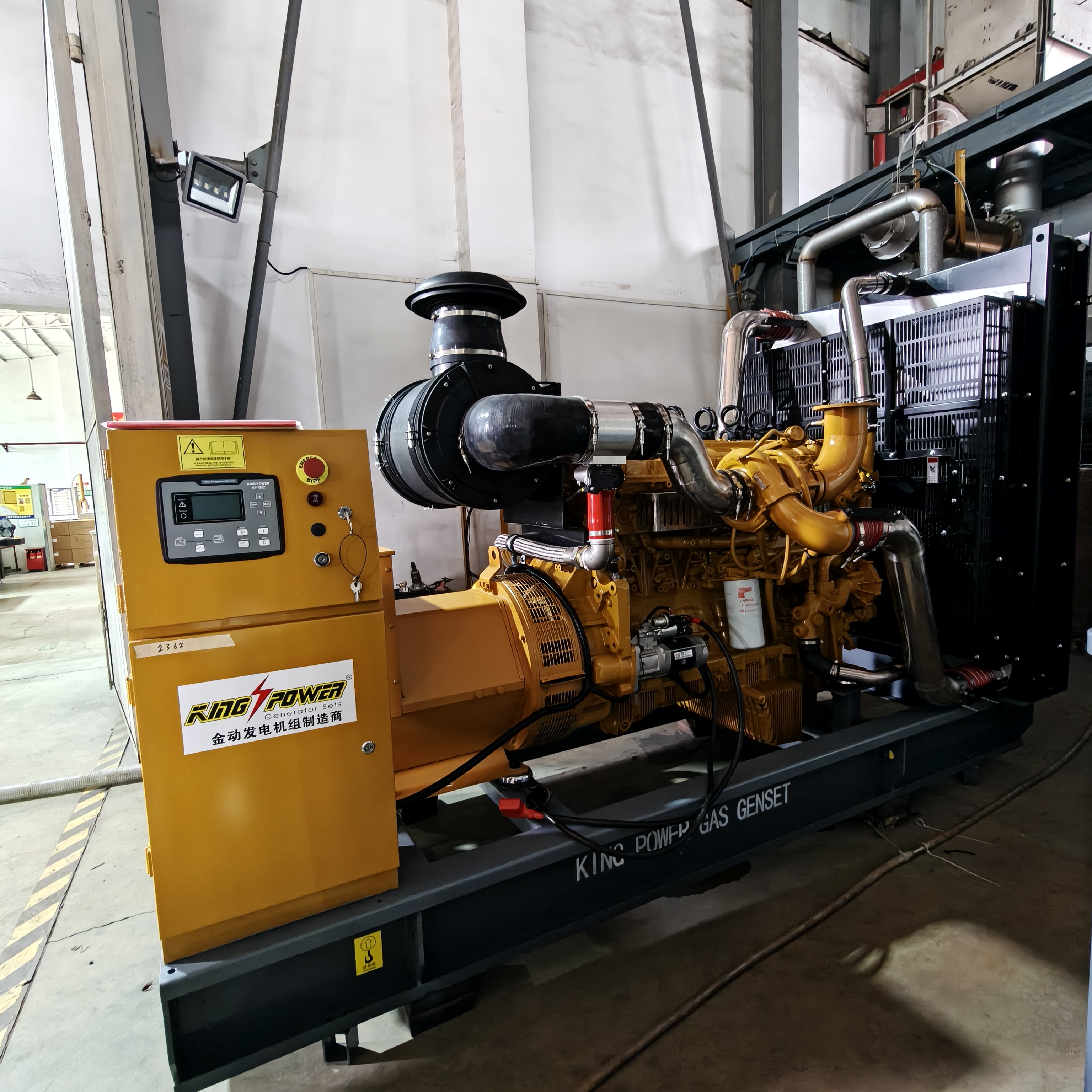
You should never accept equipment based on verbal promises. The Factory Acceptance Testing (FAT) process plays a vital role here. Subjective assurances from sales teams simply hold no value in critical infrastructure. Empirical testing remains absolutely non-negotiable. The FAT proves the machine can perform before it leaves the manufacturing facility.
Validating the exact generator power rating specifications requires structured testing. You must execute a step-by-step load bank test. This simulates the electrical demand your facility will generate.
Follow this standard testing sequence:
During these step-load applications, you must monitor electrical stability. Watch closely for voltage and frequency drops. Modern electronics require highly stable power. A severe transient voltage dip can knock out sensitive servers or medical equipment. The alternator must recover quickly from sudden demand spikes.
Heat runs verify overall thermal stability. Generating electricity creates massive amounts of heat. You must inspect oil pressure, coolant temperatures, and exhaust heat under peak loads. This ensures the cooling system actually matches the rated output. A poorly designed radiator will cause the engine to safely shut down under full load. You must catch these thermal bottlenecks during the FAT, not during an actual power outage.
Nameplate ratings reflect a perfect world. You must confront the reality of your actual site conditions. Manufacturers typically calculate ratings at standard temperature and altitude. They often use 25°C (77°F) and 100 meters above sea level. Your facility likely operates in much harsher conditions. You have to account for these environmental differences.
Altitude and temperature impose strict performance penalties. Lower air density directly reduces engine combustion efficiency. The engine simply breathes less oxygen per intake stroke. Furthermore, thin air reduces the alternator's cooling capacity. High ambient temperatures compound this issue. Hotter air holds less density and provides poor thermal transfer.
Let us look at a contextual sizing example. Imagine you purchase a unit explicitly marketed as a 170kw king power lpg power generator. You install it at a high-altitude mining site. Perhaps you place it in a sweltering desert climate. Due to air density losses, it might only deliver 145kW of usable power. If your facility requires exactly 160kW, this installation will fail immediately. You will experience nuisance tripping and system shutdowns.
Typical Environmental Derating Penalties Chart
| Environmental Factor | Threshold Exceeded | Estimated Capacity Penalty |
|---|---|---|
| High Altitude | Every 300m above 1,000m | Deduct 1% to 3% output |
| High Ambient Temperature | Every 5.5°C above 40°C | Deduct 2% to 3% output |
| High Humidity | Above 60% relative humidity | Minor reduction (varies by engine) |
This creates a crucial actionable checkpoint for your procurement team. You must mandate a site-specific derating curve chart. Make this a hard requirement before equipment sign-off. Force the manufacturer to calculate the exact output based on your specific zip code and elevation.
Your equipment is only as reliable as the vendor standing behind it. You must audit the vendor's credibility thoroughly. A compliant partner provides transparent, verifiable data. A high-risk vendor hides behind vague brochures and refuses independent testing. Knowing how to tell them apart saves you immense frustration.
Choosing a reliable generator power rating supplier requires strict document verification. You should demand a comprehensive technical package before accepting delivery.
You also need to verify component synergy. A generator combines an engine and an alternator. They must work together seamlessly. Ensure the alternator’s continuous rating is safely matched to the engine’s output. In fact, a slightly oversized alternator prevents electrical bottlenecks. It handles transient heat much better. If the vendor pairs a weak alternator with a strong engine, you will suffer voltage instability under heavy loads.
Paperwork tells only half the story. You must conduct visual and mechanical auditing upon delivery. Never rely on the documentation alone. Shipping stresses can damage internal components. Assembly errors occasionally slip past factory quality control. You must physically inspect the unit before you approve the final handover.
Start by examining the control panel and breaker alignment. Check the main circuit breakers carefully. They must be properly sized to handle the stated generator power rating. If the breakers are undersized, you will experience constant nuisance tripping. If they are oversized, they will fail to protect the alternator from dangerous short circuits. Confirm the breaker ratings directly match the approved submittals.
Next, evaluate airflow and ventilation constraints. Generators require massive amounts of air to breathe and cool. Verify the installed enclosure or mechanical room design. It must allow the necessary CFM (cubic feet per minute) airflow required to sustain operation. Restricting the intake or exhaust louvers starves the engine. It leads to rapid overheating and immediate forced derating.
Finally, inspect for vibration and fluid integrity. Conduct an initial on-site start-up before applying load. Watch the skid and mounts for abnormal harmonic vibrations. Severe shaking indicates improper alignment or failing isolators. Check every hose, valve, and gasket. Look for minor fluid weeping. Even a tiny coolant leak can empty the radiator during an extended 24-hour run.
Procuring heavy electrical equipment remains an exact science. Accepting a generator is an evidence-based exercise, not a trust-based one. You cannot leave facility uptime to chance. A comprehensive inspection strategy protects your investment and ensures site safety.
We strongly reiterate the absolute necessity of structured testing. You must demand load testing, accurate derating calculations, and rigorous documentation review. Never let a vendor rush you through the acceptance phase. Take the time to verify every single metric.
Your final call to action is simple but firm. Instruct your purchasing department to withhold final payment. Do not release the funds until all on-site load tests succeed. Ensure the compliance checklists strictly match the agreed-upon technical specifications. Only then should you sign the final acceptance certificate.
A: Standard tolerances fall under ISO 8528-5 transient response classes. For typical commercial applications (Class G2), you should expect a maximum voltage drop of +/- 5%. Frequency drops should remain within +/- 0.25% under steady-state conditions. Tighter tolerances exist for data centers (Class G3).
A: Yes, modifying the enclosure directly impacts performance. If you restrict the intake louvers or exhaust airflow, the internal temperature spikes rapidly. This lack of necessary CFM airflow leads to severe overheating. The control panel will initiate a forced derating to protect the engine.
A: We recommend standard timeframes based on the classification. For a standby unit, a 2-hour full-load test usually suffices. For prime or continuous units, you should demand a 4-hour test at 100% load. This ensures the cooling system reaches absolute thermal equilibrium.
A: Power loss over time generally stems from chronic underloading or lack of maintenance. Running below 30% load causes wet stacking, where carbon buildup chokes the exhaust system. Clogged fuel filters and degrading fuel quality also severely affect the true output capacity.

