
T: 0086 13510078491
Tianraobu Village, Hengli Town, Dongguan City, Guangdong Province, 523472, China.
Views: 0 Author: Site Editor Publish Time: 2026-08-26 Origin: Site


Purchasing a standard off-the-shelf equipment model versus a highly customized configuration represents a high-stakes capital expenditure decision for any facility. Procurement teams and project engineers must evaluate this choice carefully before committing budgets. Standard off-the-shelf units certainly offer faster deployment timelines and lower initial purchase prices. However, modern mission-critical applications often face unique operational constraints. Facilities frequently encounter severe spatial limitations, complex acoustic regulations, or strict municipal emissions mandates. Standard factory builds simply cannot resolve these unique site challenges effectively.
We designed this comprehensive guide to provide procurement teams and facility engineers with an actionable, evidence-based evaluation framework. You will learn how to accurately determine if the financial return of customization outweighs the increased lead times and upfront CapEx. We will explore key acoustic adjustments, complex alternator sizing rules, and stringent supplier vetting strategies. This knowledge ensures you make a confident, compliant, and highly reliable equipment choice.
First, we must clearly define the baseline equipment profile. What exactly comes standard in a typical factory power 150 kW gas generator? A baseline unit typically features a basic 14-gauge steel weather enclosure. It includes standard brushless alternators rated for typical loads. You also receive baseline digital controllers designed for simple operational tracking and basic fault logging. These standard components work perfectly for conventional backup scenarios. They cover typical commercial facilities that do not face strict external environmental mandates.
However, the "one size fits all" manufacturing approach creates significant problems in specialized deployment environments. You must identify operational scenarios where standard units completely fail. Rooftop installations present a highly common hurdle. Commercial roofs usually impose strict structural weight limits per square foot. Standard heavy steel enclosures easily exceed these safety thresholds, requiring custom aluminum alternatives. Hospitals face another unique challenge entirely. Medical facilities require critical-grade exhaust silencers to protect patient comfort. They must also strictly meet residential zoning laws regarding noise pollution. When standard configurations miss the mark, you risk severe compliance failures and delayed project approvals.
Use our decision matrix checklist below. If operational uptime matters heavily, consider customization. If you need specific grid-syncing capabilities, skip standard units entirely. If local emissions mandates are exceptionally strict, shortlisting a custom build becomes essential.
| Site Requirement | Standard Unit Capability | Custom Unit Solution |
|---|---|---|
| Standard Commercial Backup | Excellent (Basic weather protection) | Unnecessary (Over-engineered) |
| Rooftop Weight Limits | Poor (Heavy steel components) | Excellent (Custom aluminum framing) |
| Hospital / Residential Noise | Poor (Standard industrial silencers) | Excellent (Critical-grade baffles) |
| Complex Grid Paralleling | Poor (Basic digital controllers) | Excellent (Advanced PLC integration) |
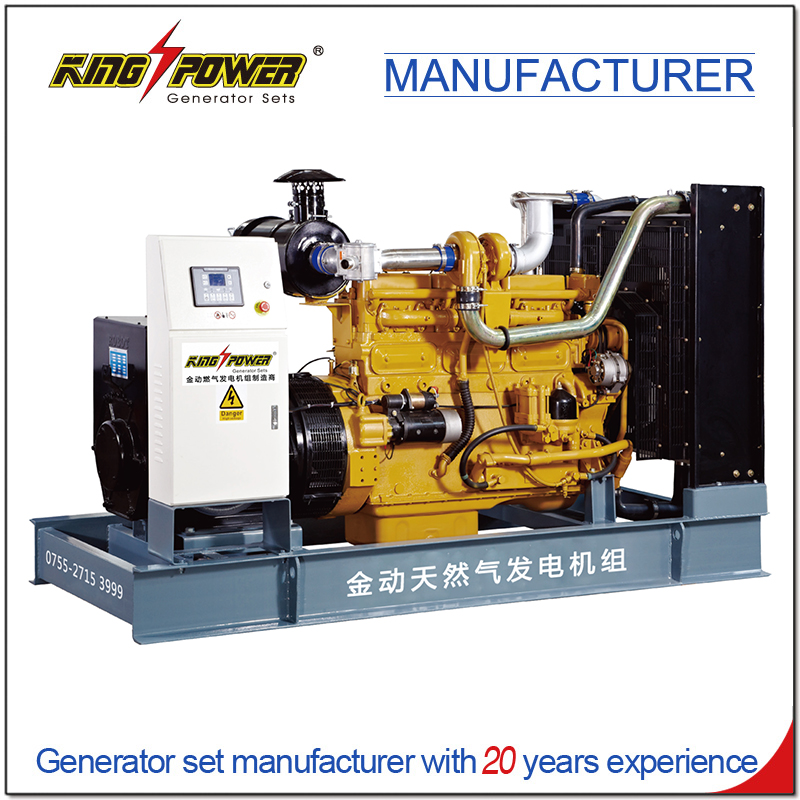
Standard acoustic and environmental enclosures often fail stringent municipal noise ordinances. City zoning boards heavily regulate decibel levels at the property line, sometimes capping noise at 60 dBA. Customization solves this compliance issue immediately. It allows you to specify specialized sound-attenuating foam materials. You can incorporate motorized intake louvers to direct machine noise away from sensitive residential areas. Extreme climates also demand highly tailored environmental solutions. You might need extreme-cold weather packages for northern deployments. These upgrades include high-wattage jacket water block heaters. They also feature heated battery pads and anti-condensation alternator heaters to ensure instant startup during freezing winter events.
You must carefully evaluate your alternator capabilities and motor starting needs. Facilities frequently must modify 150 kW gas generator specifications to handle heavy transient loads safely. Starting large HVAC chillers demands massive initial current draw. Industrial motors draw similar surge power during startup. You can up-size the factory alternator directly. This strategy avoids increasing the actual engine displacement size. An oversized alternator handles heavy inductive loads easily and safely. It prevents severe voltage dips across your facility during sudden load steps.
Control systems and paralleling requirements frequently force custom engineering at the factory level. Standard control panels often lack advanced networking capabilities required by modern smart buildings. You might need non-standard telemetry data extraction. Your facility might require specialized SCADA system compatibility via Modbus TCP/IP or fiber optic connections. Customized switchgear integrates smoothly into complex power networks. It allows you to parallel the new unit alongside existing power assets seamlessly. This creates a resilient, intelligent microgrid.
Finally, carefully review your fuel system modifications. Some deployment sites experience significant natural gas pressure anomalies. You must adapt the intake hardware and gas train to handle these fluctuations reliably. Certain remote facilities require specialized dual-fuel options for maximum uptime. They might mandate LP (liquid propane) liquid withdrawal systems for emergency fuel redundancy. Factory modifications guarantee these high-pressure fuel systems operate safely and meet local fire codes.
Buyers often hesitate at the upfront CapEx required for bespoke machinery. A 150 kW gas generator customized at the factory undoubtedly commands a noticeable premium over a stock unit. However, this initial investment drives a strong, verifiable operational ROI. It directly prevents extremely expensive aftermarket retrofits. Field modifications require expensive local contractor labor and extended downtime. Factory customization completely avoids unexpected operational disruptions during complex post-sale installation phases.
Customizing physical dimensions offers immediate on-site installation cost reductions. You can request customized exhaust routing directly from the factory assembly line. Optimal routing reduces on-site contractor hours significantly. Plumbers and master electricians spend less time fabricating custom adapters in the field. It also eliminates structural modification costs at your facility. You avoid cutting new roof penetrations or pouring extended concrete mounting pads. Pre-wired, pre-configured systems simply drop into place faster.
Efficiency and fuel economics provide the largest long-term financial return on your initial investment. Standard engines assume operation at sea level under average ambient temperatures. Factory engineers can tune the engine map specifically for your exact site location. They optimize the air-fuel ratio for specific local altitudes. They adjust ignition timings for extreme ambient temperatures. This precision lean-burn tuning maximizes fuel efficiency over a typical 15-year lifecycle. Better fuel economics directly improve your capital return on investment by slashing monthly operational fuel expenses.
Custom builds introduce specific project realities that differ from off-the-shelf purchases. You must manage these realities carefully to keep your project on track.
Finding the right manufacturing partner dictates your ultimate project success. Use these specific criteria to evaluate potential equipment vendors during the procurement phase.
Customization is not the right path for every single buyer. You must evaluate your true site demands honestly. If a standard unit meets 100% of your regulatory and operational thresholds, buy the standard model. It saves upfront capital and arrives much faster. However, if there is even a 10% gap in compliance, spatial limits, or network integration, you must customize at the factory. Factory modifications guarantee electrical safety, preserve warranty coverage, and ensure highly reliable operational performance.
We advise all buyers to finalize their site load profile thoroughly first. Document your municipal constraints completely. Gather your structural limits, emissions targets, and noise ordinances into one concise engineering brief. Once you define these parameters, request a custom engineering review. Compare itemized factory quotes closely to make a financially sound, long-lasting equipment decision.
A: Costs vary widely based on your specific modifications. An upgraded digital controller might only add 5% to the base price. However, a custom-drop aluminum enclosure with specialized critical-grade acoustic baffling could add 20% or more. Always request itemized engineering quotes to understand the exact premium for each customized feature.
A: Yes, but this approach carries significant technical and financial risks. Bolt-on aftermarket parts often void your original factory warranties instantly. These field modifications rarely integrate as seamlessly as factory-engineered solutions. Post-purchase upgrades generally cost much more due to expensive local contractor labor rates.
A: Custom units generally require 12 to 24 weeks for final delivery. This extended timeline factors in initial custom engineering, client drawing approvals, bespoke metal fabrication, and specialized factory testing. Supply chain variations for highly unique components can occasionally extend these realistic industry estimates.
A: The generator itself does not dictate the permit. Your site's local emissions rules, zoning laws, and noise ordinances determine specific permitting requirements. Custom units are actually built specifically to pass these strict local permits. Proper factory customization prevents expensive compliance failures during final municipal inspections.

