
T: 0086 13510078491
Tianraobu Village, Hengli Town, Dongguan City, Guangdong Province, 523472, China.
Views: 0 Author: Site Editor Publish Time: 2026-08-08 Origin: Site


Moving a waste-to-energy (WTE) project from feasibility studies to procurement requires moving past theoretical energy values. We must confront stark mechanical realities. The profitability of any WTE facility hinges on a critical choice. You must select a generator capable of handling the specific chemical and physical characteristics of your derived fuel. If you choose poorly, you face excessive downtime and rapid component failure.
This guide breaks down the technical evaluation criteria you need right now. We explore how to select the right biomass generator set based on feedstock variance, output requirements, and long-term operational resilience. You will learn to align combustion technology with your specific fuel types. Furthermore, you will discover the core engineering metrics driving efficient, long-lasting performance. Mastering these variables separates profitable energy infrastructure from costly maintenance liabilities.
No single generator design handles all waste streams effectively. You cannot just buy a standard unit and expect reliable operation. Matching your engine or turbine to your specific fuel conversion method is vital. This acts as your very first shortlisting filter. Whether you employ gasification, anaerobic digestion, or direct combustion, the combustion technology must align perfectly.
Internal combustion engines operate vastly differently depending on the input fuel. Biogas features high methane concentrations. Syngas from gasification relies primarily on carbon monoxide and hydrogen. These specific gas profiles behave differently inside an engine cylinder.
Biogas burns relatively predictably if you dry it properly. Syngas, however, burns much faster due to the high hydrogen content. This rapid combustion creates a severe risk of engine knocking. Knocking sends massive mechanical shockwaves through the pistons. When gas quality fluctuates, you must actively derate the engine. Derating protects the internal components but ultimately reduces overall power output. Engineers must balance aggressive tuning parameters against the lifespan of the engine block.
Large-scale Refuse-Derived Fuel (RDF) projects often skip internal combustion engines entirely. Instead, they justify continuous-duty steam turbines. Direct combustion burns raw or shredded waste to heat water. The resulting steam spins a massive turbine to generate electricity.
When does this architecture make sense? It depends entirely on your threshold of scale. Steam systems require massive upfront capital expenditure. However, this higher initial cost offsets future maintenance headaches. Boilers and steam turbines offer incredible durability against highly corrosive exhaust. Raw municipal solid waste contains chlorides. When burned, these chlorides form hydrochloric acid. Steam boiler tubes handle this chemical attack far better than the delicate internal valves of a gas engine.
The following comparison table breaks down technology alignment based on standard waste-to-energy processes:
| Fuel Conversion Method | Primary Gas/Fuel Profile | Recommended Prime Mover | Key Operational Risk |
|---|---|---|---|
| Anaerobic Digestion | Biogas (Methane/CO2) | Internal Combustion Engine | Siloxane accumulation and H2S corrosion |
| Biomass Gasification | Syngas (CO/H2) | Internal Combustion Engine | Engine knocking from high hydrogen |
| Direct Mass Burn | Raw MSW / RDF | Steam Turbine | Acidic exhaust gas corrosion on boiler tubes |
Engineering teams must lock down specific technical parameters during the procurement phase. A vague specification sheet leads directly to rapid equipment failure. You must define operational limits rigorously before signing any contract. Let us explore the essential biomass generator set specifications you need to verify.
Gas Impurity Tolerances
Biomass gas is rarely clean upon production. It consistently contains siloxanes, hydrogen sulfide (H2S), and heavy tars. You must define strict acceptable limits for these impurities. High H2S creates sulfuric acid during combustion, destroying engine internals rapidly. Siloxanes are even worse. When burned, they turn into silicon dioxide, which is essentially sand. This coats the cylinder heads and clogs valves almost instantly.
Generator specifications must align perfectly with your upstream gas-cleaning infrastructure. If your biological scrubber cannot remove all siloxanes, the engine must handle the remainder without suffering a catastrophic failure.
Electrical vs. Thermal Efficiency
You must decide between pure electrical generation and Combined Heat and Power (CHP) applications. A standard waste-to-energy biomass generator set might sacrifice standalone electrical efficiency intentionally. Why? To provide usable thermal energy back to the plant.
Anaerobic digestion and gasification processes require constant heat to function. Routing engine jacket water and exhaust heat back into the plant sustains the primary biological or chemical reaction. Always evaluate overall system efficiency rather than isolating electrical output.
Load Acceptance and Grid Synchronization
Grid connections matter significantly. How well does the unit handle sudden step loads? Island mode operations demand robust load acceptance capabilities. If a heavy motor starts inside your sorting facility, the generator must not trip offline. Microgrid anchors require precise frequency control to maintain stability. You should demand detailed transient response data from the manufacturer before finalizing any purchase order.
Below is a quick reference chart summarizing typical impurity thresholds for internal combustion engines running on raw biogas:
| Impurity Type | Typical Maximum Limit | Effect of Exceeding Limit |
|---|---|---|
| Hydrogen Sulfide (H2S) | < 200 ppm | Severe acid corrosion of bearings and exhaust |
| Siloxanes | < 5 mg/Nm3 | Silicon dioxide deposits on valves and spark plugs |
| Halogens (Fluorine/Chlorine) | < 50 mg/Nm3 | Acidification of engine lubricating oil |
| Particulate Matter | < 10 mg/Nm3 | Abrasive wear on cylinder liners and turbochargers |
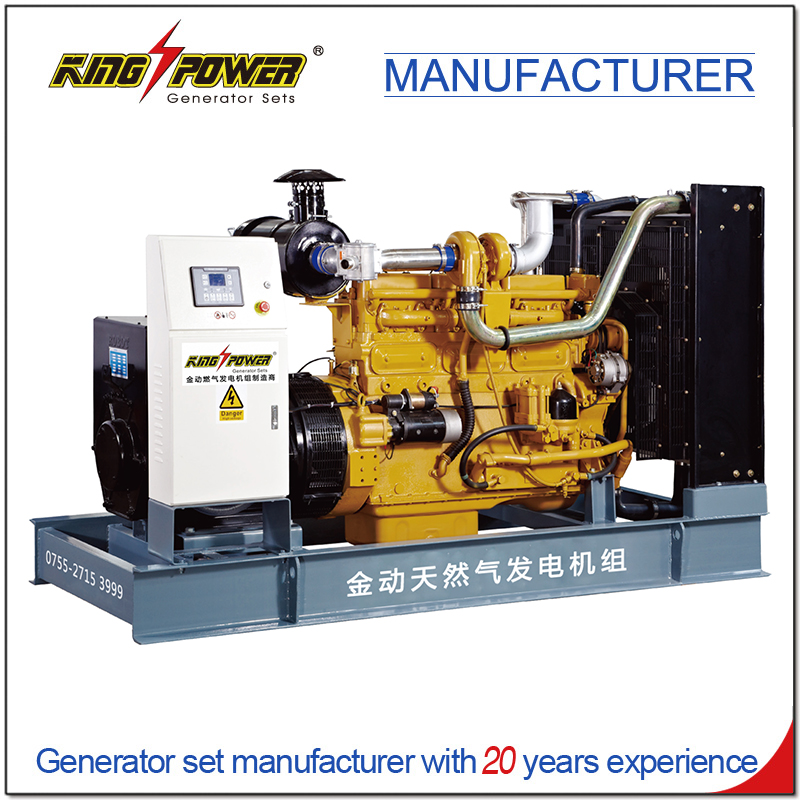
Standard commercial generator sets are built for stable, pipeline-quality natural gas. Waste-to-energy projects face harsh implementation realities daily. Off-the-shelf units rarely survive long in these environments. WTE frequently requires engineered variations to maintain continuous uptime.
Variable Waste Streams
Municipal solid waste and mixed agricultural runoff change daily. Today's fuel differs chemically from tomorrow's fuel. You need custom fuel blending systems to stabilize the input. Dynamic air-fuel ratio controls become absolutely mandatory. Standard lambda sensors degrade quickly in syngas environments. We also recommend specialized cylinder heads designed to handle wildly fluctuating combustion temperatures. A precisely engineered custom biomass generator set adjusts in real-time, preventing misfires and unexpected stalls.
Harsh Operating Environments
Location often dictates mechanical design. Military bases and municipal public works frequently enforce strict operational facility standards. Extreme ambient temperatures require oversized cooling packages. High dust environments demand robust, multi-stage intake filtration systems. You must customize the external enclosure and the core engine block materials to survive these physical realities.
Risk Mitigation
Let us address the transparent trade-off directly. Custom units carry longer manufacturing lead times. They also demand notably higher upfront costs. However, they dramatically reduce unscheduled maintenance intervals. Every hour of downtime bleeds money from your facility. Investing heavily upfront protects your long-term revenue stream. Standard units may save you capital on day one, but they will cost you a fortune in emergency repairs by year two.
You must evaluate equipment viability through strict financial and environmental lenses. Initial purchase price rarely reflects the true financial burden of running a power plant. We must analyze long-term operational math rigorously.
Emissions Standards & Permitting
Local air quality regulations dictate project approval. You must select designs capable of meeting regional NOx, SOx, and particulate matter limits. Failing to meet these standards halts operations immediately. If your engine runs dirty, you will need cost-prohibitive post-combustion scrubbers. Smart engineering handles emissions primarily within the combustion chamber through lean-burn technologies.
Maintenance Downtime
Let us take a realistic look at routine maintenance. Top-end and major overhaul intervals dictate your total plant availability. Biogas and syngas applications inherently cause much faster internal wear. Valves, spark plugs, and engine oil degrade far faster than they do with traditional fuels. For instance, spark plugs in a biogas engine might only last 1,500 hours, compared to 4,000 hours on pipeline gas. You need transparent maintenance schedules from the manufacturer on day one.
Cost Per Operating Hour
Shift your evaluation from a basic "cost per kilowatt" mindset. Instead, analyze the specific cost per operating hour. This calculation must factor in routine consumables. It must also account for predicted component degradation over a decade. A cheaper engine often consumes vastly more expensive replacement parts over ten years. True financial efficiency lies in sustained, uninterrupted runtime.
Choosing heavy equipment means choosing a long-term partner. How do you separate qualified engineering partners from generic equipment distributors? You must apply rigorous vendor vetting logic. Do not accept generic marketing brochures as proof of capability.
Follow these specific steps when evaluating potential partners:
Selecting the right equipment remains an exercise in profound risk management. You must balance complex feedstock realities against required electrical output. You also need an acceptable, predictable maintenance burden. The prime mover acts as the beating heart of your entire facility. Cutting corners on generator specifications guarantees operational failure.
Before moving forward, secure a comprehensive laboratory analysis of your specific waste stream. Analyze your projected gas profile continuously over a 30-day period to capture peak fluctuations. Finally, use this precise data to inform your Request for Proposal (RFP) before submitting it to any supplier. Clear data ensures you purchase a solution rather than a problem.
A: Lifespan depends heavily on gas purity. These units typically range from 10 to 15 years. Achieving this longevity requires strict adherence to major overhaul schedules. It also demands rigorous, uninterrupted upstream gas conditioning to prevent internal corrosion and premature component failure.
A: High moisture lowers the calorific value of your fuel. This leads directly to power derating. Moisture can also cause harmful condensation inside engine internals. To combat this, facilities require robust upstream drying systems or custom engine tuning to safely handle the variance.
A: While technically possible via retrofitting, it carries immense risks. You must change compression ratios and harden internal valves. However, it is almost always more cost-effective and reliable long-term to purchase a purpose-built or modified unit from a specialized supplier. Standard units simply degrade too quickly.

