
T: 0086 13510078491
Tianraobu Village, Hengli Town, Dongguan City, Guangdong Province, 523472, China.
Views: 0 Author: Site Editor Publish Time: 2026-09-03 Origin: Site


Selecting the wrong generator capacity carries steep operational risks. Under-sizing triggers catastrophic equipment failures. It causes severe voltage drops during critical motor start-ups. Conversely, over-sizing drives unnecessary capital expenditure. It ruins fuel efficiency and increases maintenance overhead. You need absolute precision to keep facilities running smoothly.
Modern propane systems provide a clean, stable-fuel alternative to traditional diesel engines. Propane boasts an infinite shelf life. It emits significantly fewer pollutants into the environment. However, successful deployment demands rigorous load profiling and careful site planning. You cannot simply guess your facility requirements.
We designed this guide for project managers and facility engineers. We provide a technical, evidence-based framework for power calculation. You will learn how to accurately measure load requirements. We will help you evaluate core specifications and select the right equipment. This ensures a resilient, compliant, and highly efficient backup power infrastructure.
Understanding power draw remains the most critical step in equipment selection. Many engineers make the mistake of only calculating steady-state operations. They ignore the massive power spikes required to start heavy machinery.
Motors require immense energy to break physical inertia. We call this initial power draw inrush current. Inductive loads demand double or triple their steady-state wattage upon startup. Examples include commercial HVAC compressors and large industrial conveyor belts. A compressor might require ten kilowatts to run. However, it could easily demand thirty kilowatts just to start turning. If your system cannot handle this starting wattage, the engine will stall. It will cause a severe brownout across your entire facility.
You must map out every piece of equipment carefully. Follow these crucial steps to build an accurate electrical profile:
You should never run a power unit at its absolute maximum continuously. We strongly advise against pushing engines to one hundred percent capacity. This causes rapid thermal degradation and component wear. Instead, follow the eighty percent rule of thumb. Calculate your total peak electrical load. Size your system so this peak load operates at seventy to eighty percent of the prime rating. This ensures engine longevity. It provides excellent voltage stability. It also leaves valuable headroom for future facility expansions.
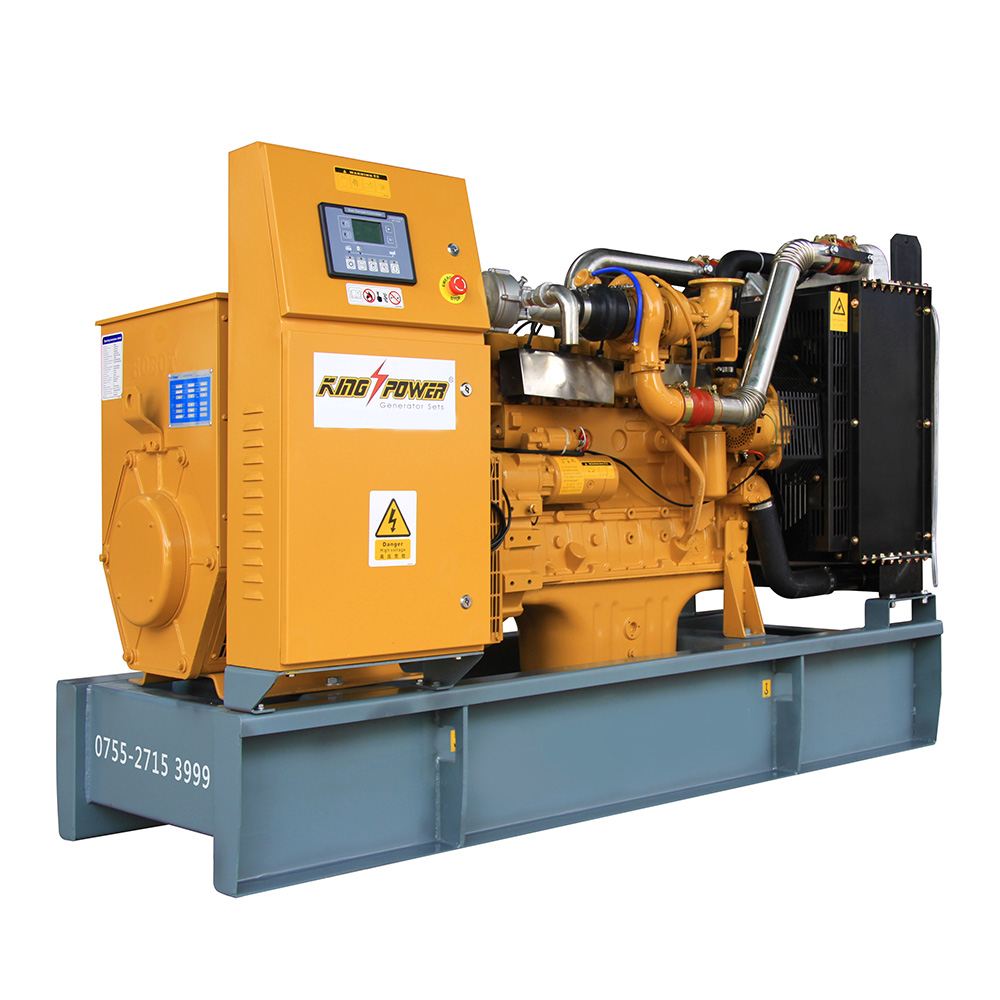
Different facilities require vastly different hardware architectures. You cannot apply a one-size-fits-all approach to power generation. We break down the capacity requirements into three distinct operational tiers.
Table: Generator Capacity Scale and Applications| Capacity Range | Primary Use Cases | Key Technical Focus |
|---|---|---|
| 20kW – 50kW | Retail spaces, cell towers, small agriculture | Single-phase power, rapid ATS integration, small footprint |
| 100kW – 500kW+ | Manufacturing, data centers, large construction | Three-phase power, paralleling systems, heavy alternators |
| Mobile/High-Capacity | Disaster response, events, remote mining | Skid/trailer mounts, logistics-friendly design, rugged enclosures |
Small businesses and remote telecom outposts have specific power profiles. They usually require between twenty and fifty kilowatts. Retail spaces need power for point-of-sale systems and basic lighting. Cell towers require continuous, uninterrupted transmission capabilities. For these use cases, focus on single-phase power compatibility. You need rapid Automatic Transfer Switch (ATS) integration. The system must detect grid failure and spin up in seconds. Minimizing the physical footprint also remains vital for tight commercial lots.
Heavy industry requires a completely different class of hardware. Manufacturing facilities and off-grid construction sites run massive loads. Large data centers demand absolute redundancy. These applications require systems ranging from one hundred to over five hundred kilowatts. You must focus on three-phase power delivery. Advanced paralleling capabilities become essential here. Paralleling allows multiple large units to sync their sine waves. Heavy-duty alternators prevent overheating during continuous prime operation.
Temporary operations require robust logistics. Emergency disaster response teams face unpredictable environments. Remote mining sites lack existing infrastructure entirely. They need massive power output combined with high mobility. You should look for specialized niche equipment to meet these needs. A king power high efficiency portable 200kw unit balances these extreme demands perfectly. It provides industrial-grade power generation. It mounts securely on logistics-friendly skids or road-ready trailers. This allows rapid deployment to any geographic location.
Many buyers focus entirely on peak wattage. They ignore the finer details of electrical output and efficiency. You must evaluate the deeper technical specifications. This ensures the hardware survives your specific operating environment.
Power cleanliness matters just as much as raw power volume. Total Harmonic Distortion (THD) measures electrical signal quality. Non-linear loads distort the standard electrical sine wave. Facilities running sensitive equipment require a THD firmly under five percent. This is a non-negotiable requirement. Microprocessors, Programmable Logic Controllers (PLCs), and medical devices will malfunction under dirty power. They require perfectly smooth electrical curves to function safely.
Fuel efficiency determines long-term viability. We advise looking strictly beyond surface-level consumption marketing claims. You must study the Brake Specific Fuel Consumption (BSFC) metrics. BSFC measures fuel efficiency relative to actual mechanical power output. It dictates the true operational overhead of your equipment. A cheaper unit often burns excessive fuel under heavy load. This hidden inefficiency negates your upfront capital savings very quickly.
Noise pollution regulations are becoming stricter globally. You must evaluate acoustic ratings carefully. Manufacturers measure sound levels in decibels (dB(A)), usually at a seven-meter distance. Weatherproof and sound-attenuated enclosures are absolutely vital. This proves especially true in municipalities with strict zoning ordinances. Urban hospitals and residential telecom sites face heavy fines for noise violations. High-quality acoustic baffles keep engine roar within legal limits.
Propane behaves differently than liquid diesel. You cannot simply pump it into an engine. Understanding fuel storage physics prevents catastrophic system stalling during critical outages.
Vaporization limits represent the most common point of failure. Engines draw vaporized gas, not liquid fuel. Liquid propane must boil into a gas inside your storage tank. It absorbs ambient heat through the steel tank walls to achieve this phase change. If your tank runs too small, vaporization slows down. If ambient temperatures plummet, boiling stops entirely. The liquid cannot vaporize fast enough to meet engine demand. This causes severe pressure drops. A properly integrated lpg generator set will eventually stall out under these starved conditions.
You cannot size a tank based solely on runtime duration. You must calculate the required vaporization rate. Engineers call this the wetted surface area. A larger tank provides more surface area for ambient heat transfer. Even if a small tank holds enough fuel for twenty hours, it might freeze over. It cannot absorb enough heat to boil the liquid fast enough for a heavy electrical load. Always size up your tank volume to guarantee adequate vaporization rates.
Correct gas piping infrastructure remains mandatory for safety and performance. Undersized pipes create severe pressure drops between the regulator and the engine intake. You must size gas lines based on maximum flow rates and distance. Furthermore, strict fire codes govern tank placement. NFPA 58 regulations mandate specific distance requirements between bulk tanks and physical structures. Ignoring these codes leads to failed safety inspections and massive liability risks.
Deployment involves substantial civil and mechanical engineering. Even the best equipment fails if installed improperly. Partnering with seasoned experts mitigates costly rollout disasters.
Facilities often encounter completely avoidable rollout pitfalls. Many project managers fail to account for local air quality emissions permitting. Propane burns clean, but local authorities still require exhaust documentation. Others ignore the structural requirements of concrete mounting pads. High-capacity engines vibrate intensely. They require thick, reinforced concrete foundations. Furthermore, crane delivery logistics often surprise underprepared contractors. Moving heavy machinery into tight urban alleys requires precise logistical planning.
You need more than a mere equipment broker. You need a dedicated solutions partner. Technical capability separates true professionals from simple box-pushers. Use these strict criteria to evaluate your potential vendor:
Sizing an industrial power system requires deep technical diligence. You cannot rely on broad estimates. You must execute a precise load profile. Keep the following next steps in mind as you plan your infrastructure:
A: Exact fuel consumption depends on engine efficiency, alternator design, and operating load. As a baseline rule, a 100kW unit burns approximately 12 to 15 gallons of propane per hour at a 50% load. Operating at 100% capacity pushes consumption to roughly 20 to 25 gallons per hour. Always review the manufacturer's specific Brake Specific Fuel Consumption (BSFC) charts to calculate exact fuel logistics for your site.
A: Technical solutions exist, but experts strongly advise against them. You can install aftermarket bi-fuel conversion kits on diesel engines. However, these converted units often suffer from severe reliability issues and voided manufacturer warranties. Dedicated, spark-ignited propane engines provide superior reliability. They also guarantee adherence to strict local emissions compliance standards. Investing in a purpose-built unit ensures safer long-term operation.
A: Yes, naturally aspirated engines lose power as altitude increases. Thinner air reduces volumetric efficiency and impacts the internal combustion process. Engineers apply a standard derating formula to calculate this exact loss. You should expect approximately a 3% reduction in total power output for every 1,000 feet of elevation above sea level. You must factor this derating into your initial load profile.

