
T: 0086 13510078491
Tianraobu Village, Hengli Town, Dongguan City, Guangdong Province, 523472, China.
Views: 0 Author: Site Editor Publish Time: 2025-11-27 Origin: Site


You use a biogas generator to change organic waste into biogas. This happens through anaerobic digestion. Helpful bacteria break down the waste. They do this in a place without oxygen. You may see more biogas generators each year. The market size keeps growing:
Year Range | Market Size (USD Billion) | CAGR (%) |
|---|---|---|
2023-2032 | 1.2 to 2.5 | 8.2 |
2025-2035 | 14.54 to 31.27 | 7.96 |
This growth shows biogas generators are important. They help manage waste. They also help make clean energy.
Biogas generators change organic waste into renewable energy. They do this by using anaerobic digestion. Mixing different kinds of organic waste helps make more biogas. This is because it balances the nutrients. It is important to check the biogas system often. This helps stop problems like explosions. It also keeps the system working well. Biogas can be used for electricity and heating. It can also be used for cooking. After cleaning, it can even be used as fuel for vehicles. The leftover digestate is a strong fertilizer. It helps soil stay healthy and helps crops grow better.
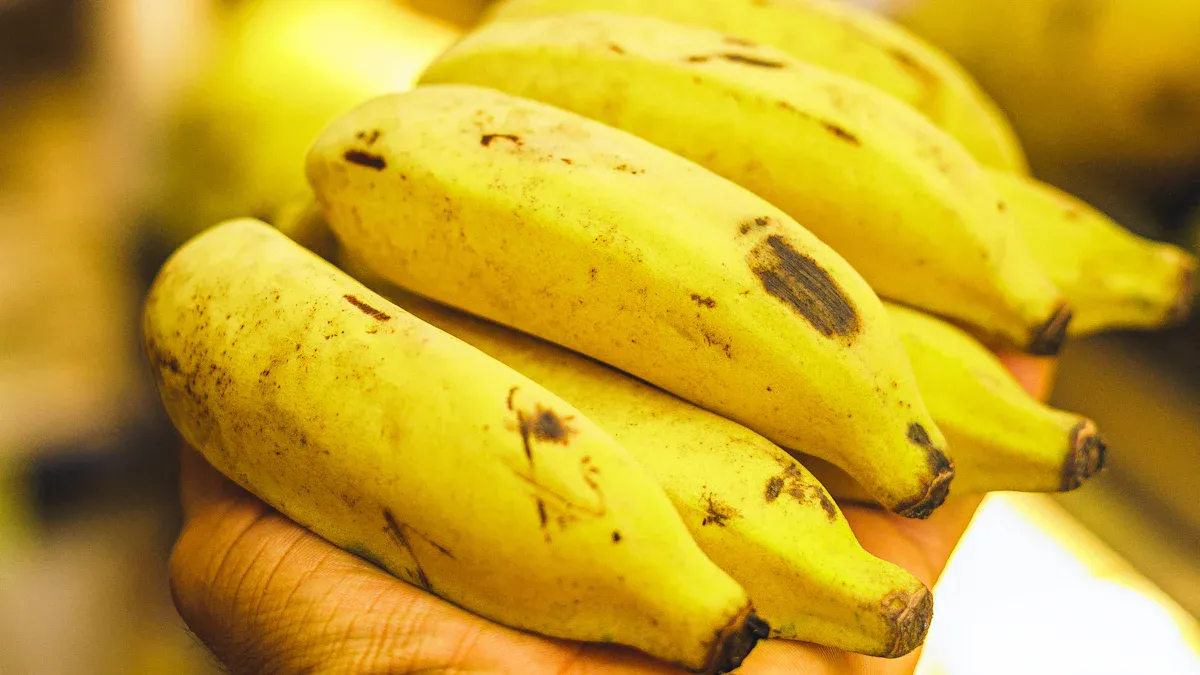
A biogas generator uses many kinds of organic waste. The most common ones are food waste and manure. Farmers collect manure from barns or fields. People at home and in restaurants save food scraps after eating. Some systems use farm waste like corn cob leaves or tamarind husks. Each waste type has different nutrients. This changes how much biogas you get.
Tip: Mixing different waste types helps balance nutrients. It can make more biogas.
Here is a table that shows how waste composition affects biogas:
Organic Waste Type | Carbon/Nitrogen Ratio | Biogas Production (L CH4) |
|---|---|---|
Tamarind Husk | 21.87 | High |
Corn Cob Leaves | 24.34 | High |
Cattle Manure | N/A | 860 |
Sheep Manure | N/A | 50 |
The amount of fat, protein, and carbohydrates in waste matters. These nutrients help decide how much biogas is made.
You must get organic waste ready before using it. First, take out metals, plastics, and other things that are not organic. This keeps the biogas generator safe and stops clogs. Next, mix different waste types to make the texture even. Cut big pieces into smaller ones. This helps bacteria break down the waste faster.
Here are the main steps to prepare organic waste:
Remove metals, plastics, and other non-organic things.
Mix waste types to get an even texture.
Cut big pieces to help digestion go faster.
You should store the mixed waste for a short time. This makes the waste more even and ready for use. Some systems control the temperature to keep things steady. Chopping or blending waste before use can help make more biogas. The best way depends on what is in the waste.
Note: Taking out bad items and keeping the right temperature and pH helps you get more biogas from your waste.
You begin by putting organic materials into the biogas generators. You must be careful when handling waste. This keeps the system safe and working well. You should wear gloves and masks for protection. Good hygiene is important. Ventilation helps you avoid breathing bad gases. Before loading, check for metals or plastics. Remove anything that is not organic. This helps the biogas generator run smoothly.
Safety Measure | Description |
|---|---|
Personal Protective Equipment | Keeps you safe from germs and chemicals. |
Engineering Controls | Uses air flow to lower dangerous gas levels. |
Administrative Practices | Follows hygiene rules to keep risks low. |
Maintenance Safety | Removes oxygen from the digester during repairs. |
Dust Control | Handles dust to stop fires and explosions. |
You need to know how much organic material to add. The amount you load changes how much biogas you get. For small biogas generators, use this guide:
Organic Loading Rate (OLR) | Methane Yield (mL/g VS) | Hydrogen Yield (mL/g VS) |
|---|---|---|
4 g VS/L | 184.4 | N/A |
10 g VS/L | N/A | 61.3 |
20 g VS/L | N/A | Peak output |
Tip: Mixing different waste types gives better nutrients. This helps make more biogas.
After loading, bacteria start breaking down the waste. This happens in steps. Each step helps make biogas.
Feedstock Collection and Preparation: You gather and get organic materials ready.
Hydrolysis: Hydrolytic bacteria change complex waste into simple parts.
Acidogenesis: Acidogenic bacteria turn these parts into acids, alcohols, hydrogen, and carbon dioxide.
Acetogenesis: Acetogenic bacteria make acetic acid, hydrogen, and carbon dioxide.
Methanogenesis: Methanogenic archaea create methane and carbon dioxide from acetic acid and hydrogen.
Different bacteria work at each stage. Acetogens make acetic acid. Methanogens make methane and carbon dioxide. Bacteria break down carbohydrates first. Acidogenic bacteria change sugars and amino acids into gases and acids. Methanogens finish by making biogas.
Type of Bacteria | Role in Biogas Production |
|---|---|
Acetogens | Make acetic acid and other compounds from organic material. |
Methanogens | Make methane and carbon dioxide from acetic acid and others. |
Temperature control is very important. Higher temperatures make bacteria work faster. You get more methane in less time. The best methane yield comes sooner. You can get over 50% more methane with higher temperatures. Thermophilic phases speed up early steps. Mesophilic phases help keep things steady.
Note: In a good biogas generator, bacteria can finish in 30 days. In landfills, it can take a year for methane to form.
You must watch the biogas generator to keep it working well. Check things like viscosity, acid number, base number, antioxidants, wear metals, water, and contamination. These checks help you find problems early.
Parameter | Importance |
|---|---|
Viscosity | Shows if the system is oxidizing. |
Total Acid Number (TAN) | Tells you if acids are building up. |
Total Base Number (TBN) | Shows if acids can be neutralized. |
Antioxidant depletion levels | Tells if oil is breaking down. |
Wear metals and contamination | Checks for engine damage. |
Water content | Too much water can hurt the engine. |
Silicon and chlorine presence | Shows outside contamination. |
If you do not check the system, bad things can happen. You could have explosions, health problems, or broken equipment. You might also hurt the environment. Poor monitoring can cause toxic gas leaks, blockages, and fires. You could break environmental laws.
Aspect | Consequence of Poor Monitoring |
|---|---|
CH4 and H2S Detection | Explosions and health problems from toxic gases. |
Temperature and Pressure | Equipment can break, leak, or get blocked. |
Oxygen Levels | Risk of not getting enough air in small spaces. |
Fire Detection | Slow response to fires. |
Environmental Monitoring | Breaking rules and causing pollution. |
Control Systems | Slow alarms can make problems worse. |
Tip: Check temperature, pressure, and gas levels often. This keeps the biogas generator safe and working well.
Careful loading, bacterial breakdown, and system checks all help make biogas from organic materials. When you follow these steps, you help the environment and make clean energy.
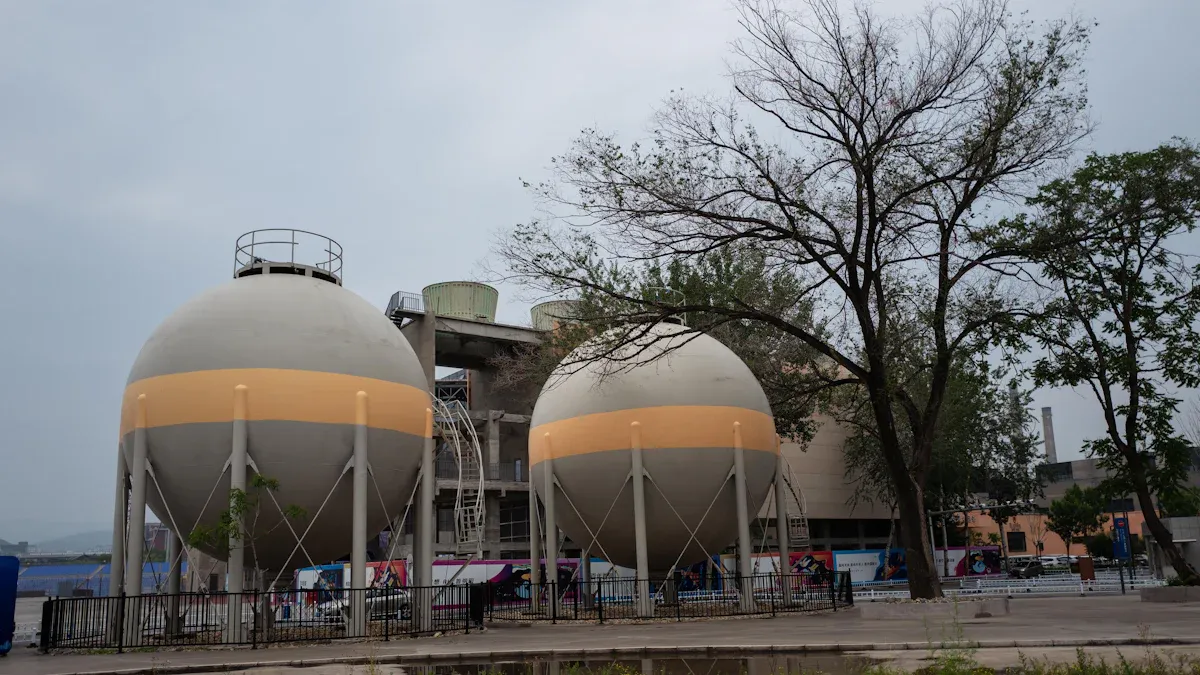
Fixed-dome digesters are built underground. This helps protect them from damage. It also keeps the temperature steady. The gas holder stays in one place. This means the system lasts many years. It does not need much fixing. Biogas is collected under pressure. The slurry goes into a tank called a compensation tank. Builders use bricks to make these digesters. This makes them strong and cheap. Local workers can help build them. This helps the community. Fixed-dome digesters pump water better than other types. They lose less gas and cost less to use.
Feature | Fixed-Dome Digesters | Floating-Drum Digesters |
|---|---|---|
Economic Efficiency | More economically efficient | Less economically efficient |
Gas Losses | Lower gas losses | Higher gas losses |
Water Pumping Performance | 14% more efficient | Less efficient |
Lifespan | Longer lifespan | Shorter lifespan (5-15 years) |
Maintenance | Requires less maintenance | Requires more maintenance |
Tip: Fixed-dome digesters last over 20 years. They have no moving parts.
Floating-drum digesters are easy to use. You can see how much gas is inside. The system keeps the gas pressure steady. Builders use materials that are easy to find. You can swap the gas drum with a balloon if needed. The drum moves up and down when biogas is made. You need to check for rust often. You also need to paint the drum. The steel drum lasts up to 15 years. In coastal areas, it lasts about five years. If you use fibrous waste, the drum can get stuck. Pipes can clog, and this is hard to fix.
Advantage | Description |
|---|---|
Simple operation | Easy to understand and use |
Constant gas pressure | Steady pressure for gas usage |
Visible gas volume | You can see the stored gas |
Use of readily available materials | Built with common materials |
Replaceable gas drum | Drum can be swapped with a balloon |
You need to remove rust and repaint the drum.
The drum can get stuck with fibrous waste.
Pipes can clog and are hard to fix.
Landfill biogas systems are used at big waste sites. They use special pipes to collect methane gas. This gas comes from waste breaking down. These systems help the environment. They catch methane and destroy it. This lowers pollution. Landfill biogas systems use generators to make electricity from methane. About 58% of the gas collected is used for energy. This means 180 billion cubic feet of methane is used out of 310 billion cubic feet collected. Dedicated biogas generators use farm or food waste. Landfill systems use buried trash.
Process | Landfill Biogas Systems | Dedicated Biogas Generators |
|---|---|---|
Gas Collection | Collect methane from decomposing waste | Use farm or food waste as feedstock |
Conversion | Turn methane into electricity with generators | Convert biogas into electricity or heat |
Emission Control | Capture and destroy methane to lower pollution | Control emissions by burning biogas |
Note: Landfill biogas systems help turn waste into energy. They also protect the air.
You can pick the best biogas system for your needs. Think about your budget and what materials you have. Each system has good points and some problems. All of them help make clean energy.
Biogas from a biogas generator can be used in many ways. It is a renewable fuel that helps make electricity. You can use a generator to power lights and machines. Many homes and factories use biogas for heating. In the countryside, people cook with biogas instead of wood or coal. Biogas can be cleaned to make biomethane. Biomethane works in vehicles and can replace natural gas. If you use one ton of organic waste, you get about 2 gigajoules (1,895,634 BTU) of energy.
Biogas can be used to:
Make electricity with a generator
Heat homes and factories
Cook food in rural kitchens
Power vehicles after cleaning
Biogas is not the same as natural gas. Biogas has methane and carbon dioxide. Natural gas has more methane and less carbon dioxide.
Gas Component | Biogas Composition (%) | Natural Gas Composition (%) |
|---|---|---|
Methane (CH4) | 50-70 | ~90 |
Carbon dioxide (CO2) | 25-50 | ~0-2 |
Nitrogen (N2) | <5 | ~0-2 |
Hydrogen (H2) | <1 | ~0-1 |
Oxygen (O2) | <1 | ~0-1 |
Hydrogen sulfide (H2S) | <3 | ~0-1 |
Water vapor (H2O) | <10 | ~0-1 |
Ammonia (NH3) | <1 | ~0-1 |
After making biogas, you get digestate as a by-product. Digestate can be used in many ways on farms. It works as a fertilizer and helps soil. Digestate makes soil better and helps crops grow. You can split digestate into liquid and solid parts. Farmers use the solid part for animal bedding. The liquid part gives nutrients to crops like grain maize.
Application Type | Description |
|---|---|
Fertilizer | Use digestate as a fertilizer for crops. |
Soil Amendment | Make soil better and stronger. |
Animal Bedding | Use the solid part for bedding animals. |
Nutrient Source | Give crops nutrients and replace some regular fertilizers. |
Organic Fertilizer | Spread digestate as an organic choice for farmers. |
Digestate has a lot of mineral nitrogen and phosphorus. Plants can use these nutrients right away. Digestate also adds organic matter and micronutrients to soil. This helps soil stay healthy and keeps nutrients from washing away.
When you put digestate back in the soil, the cycle is complete. Digestate is a strong fertilizer with lots of humus. Your soil gets better structure and more humus.
Using a biogas generator helps the environment. Biogas production traps methane from waste. Methane is a strong greenhouse gas. Using biogas stops methane from getting into the air. Biogas plants also help water stay clean. They lower nutrient runoff from manure and waste. This keeps rivers and lakes cleaner. Digestate from biogas makes soil healthier and helps crops grow.
Main environmental benefits:
Less methane goes into the air
Cleaner water
Healthier soil
If you use biogas instead of fossil fuels, you lower greenhouse gas emissions. One biogas generator can make 13,140 MWh of electricity each year. This stops 11,826 tons of CO2 from fossil fuels. You also cut methane emissions by 2,640 tons each year. The total greenhouse gas reduction can be 77,826 tons of CO2 equivalent every year.
Tip: Biogas helps fight climate change and saves natural resources.
You can use a biogas generator to change organic waste into energy. This helps the environment in many ways. The table below lists the main benefits:
Key Takeaways | Description |
|---|---|
Waste Management | Biogas generators turn waste into energy. This means less landfill use and less methane released. |
Environmental Impact | They help lower greenhouse gases and save important resources. |
Economic Considerations | You need a steady supply of waste and money to start. |
Biogas could give a quarter of the world's energy by 2050.
You can help cut up to 1.5 billion tons of CO2 by 2030.
Farms give most of the waste used for renewable energy.
You can help the planet by picking biogas for clean energy.
You usually see biogas production start within a few days. Most systems reach full output in 2 to 4 weeks. Temperature and waste type can change the speed.
You can use food scraps, animal manure, and plant waste. Avoid plastics, metals, and chemicals. These items can harm the bacteria and damage your system.
Tip: Mixing different types of organic waste helps you get more biogas.
Yes, you can use biogas safely if you follow safety rules. Always check for leaks and keep the area well-ventilated. Use proper equipment to store and burn the gas.
Waste Type | Biogas Output (m³/ton) | Energy (kWh/ton) |
|---|---|---|
Food Waste | 100–200 | 500–1,000 |
Animal Manure | 20–40 | 100–200 |
Crop Residues | 50–100 | 250–500 |
You get more energy from food waste than from manure.

