
T: 0086 13510078491
Tianraobu Village, Hengli Town, Dongguan City, Guangdong Province, 523472, China.
Views: 0 Author: Site Editor Publish Time: 2025-11-26 Origin: Site


Some safety problems are machine breakdowns, bad airflow, not enough training, electrical problems, and turning on by accident.
Pay attention and do each step slowly. This way, you can stop expensive errors and keep yourself and your things safe.
Always test a used generator before you use it. This helps keep you safe and makes sure it works well for backup power.
Use the right tools, like a multimeter and safety gear. These help you test the generator safely and correctly.
Look at the generator to check for damage or wear. Search for rust, cracks, and leaks to find any problems.
Do a load test to see if the generator can give enough power. Use the right load devices to get good results.
Keep a maintenance log and test the generator often. This helps you find problems early and makes sure your generator works in emergencies.
You need the right tools before you test a used generator. The correct equipment helps you stay safe and get good results. Here is a table that shows the important tools you need:
Tool | Description |
|---|---|
Multimeter | Checks voltage, current, and resistance. It helps you test electrical circuits. |
Megohmmeter | Tests insulation resistance. It shows if the generator’s insulation is still good. |
Clamp-on Ammeter | Measures current without touching wires. It also checks voltage and resistance. |
Generator Health Monitoring System | Lets you watch the generator’s health and performance from far away. |
PULSAR Stator Core Testing System | Tests the rotor and stator of the generator safely. |
Robotic Inspections | Goes into hard-to-reach places for fast and accurate checks. |
Load Devices (Space Heater, Saw) | Uses power from the generator to act like real use. |
Basic Hand Tools | Has screwdrivers, pliers, and wrenches for easy repairs. |
Safety Gear | Gloves, goggles, and ear protection keep you safe while testing. |
Safety is always the most important thing with generators. Here are some steps you should follow:
Look for fuel leaks before you begin. Even a small leak can start a fire.
Make sure air can move well. Generators make carbon monoxide, which is dangerous if trapped.
Wear insulated gloves and safety goggles to protect yourself from electric shock and flying pieces.
Never touch wires or terminals with bare hands.
Keep a fire extinguisher close in case something goes wrong.
Tip: Doing regular maintenance, like changing oil and cleaning air filters, helps your generator work well. Loose wires and dirty filters can cause trouble when you test.
People often make mistakes when testing generators. Some use the wrong circuit breaker or pick one that is too big, which can cause problems. Others forget to test insulation resistance or skip regular maintenance. You can stop these problems by following each step and using the right tools.

Start by looking at the generator closely. This helps you find problems early. Walk around and look at every side. Try to spot anything that looks wrong. The table below shows what to look for and what it means:
Visual Sign | Implication |
|---|---|
Rust | Indicates poor maintenance and potential decay. |
Dents | Suggests physical impact or neglect. |
Cracks | May lead to structural integrity issues. |
Damaged components | Points to possible mechanical failures. |
Leaks | Indicate potential mechanical problems. |
Check for any signs of wear or damage. If you have a maintenance log, look at it. The log tells you if parts were replaced on time. If you see missing or broken parts, the generator might not be safe. All generators should get checked once a year. If you use it a lot, check it every 200 to 250 hours.
Tip: If you see rust, cracks, or leaks, do not use the generator. Ask a professional to check it first.
Cables and connections are very important for your generator. If these parts have problems, the generator might not work. Look for loose wires, broken insulation, or burnt marks. These can mean something is wrong. The table below shows how cable and connection problems can hurt your generator:
Failure Type | Impact on Generator Functionality |
|---|---|
Loose connections | Can prevent startup of the generator. |
Connection system issues | Essential to check for proper operation and power output. |
Make sure all cables are tight and not broken. If you find any loose or damaged wires, fix them before testing. This step helps stop bigger problems later.
You must start the generator before testing it. Put the generator at least 20 feet from your house. Always keep it outside. Never use it in a closed area. Leave 3-4 feet of space on every side. This helps air move and keeps you safe from carbon monoxide. Make sure the exhaust points away from doors and windows.
Check all cords before using them. Use grounded cords that are not broken. Always use GFCI protection. Only start or stop the generator when nothing is plugged in. Keep the generator dry. Never add fuel when it is hot. Do not put too many things on the generator. Plug devices right into the generator, not your house wiring.
Listen for odd noises when you start the generator. Sounds like knocking or grinding can mean trouble. If you hear rattling or popping, or smell burning, stop the test. These signs can mean mechanical or electrical problems. Watch for shaking or strong vibrations. Loose or misaligned parts can cause this.
Tip: If you hear strange sounds or smells, turn off the generator. Check for loose or broken parts. This can help stop bigger problems.
Field data shows generators can fail during basic tests. Many experts use computer models to track failures. These models show how often generators break and recover. Temperature and system load can change how well a generator works. Keep records of each test. This helps you see patterns and stop future failures.
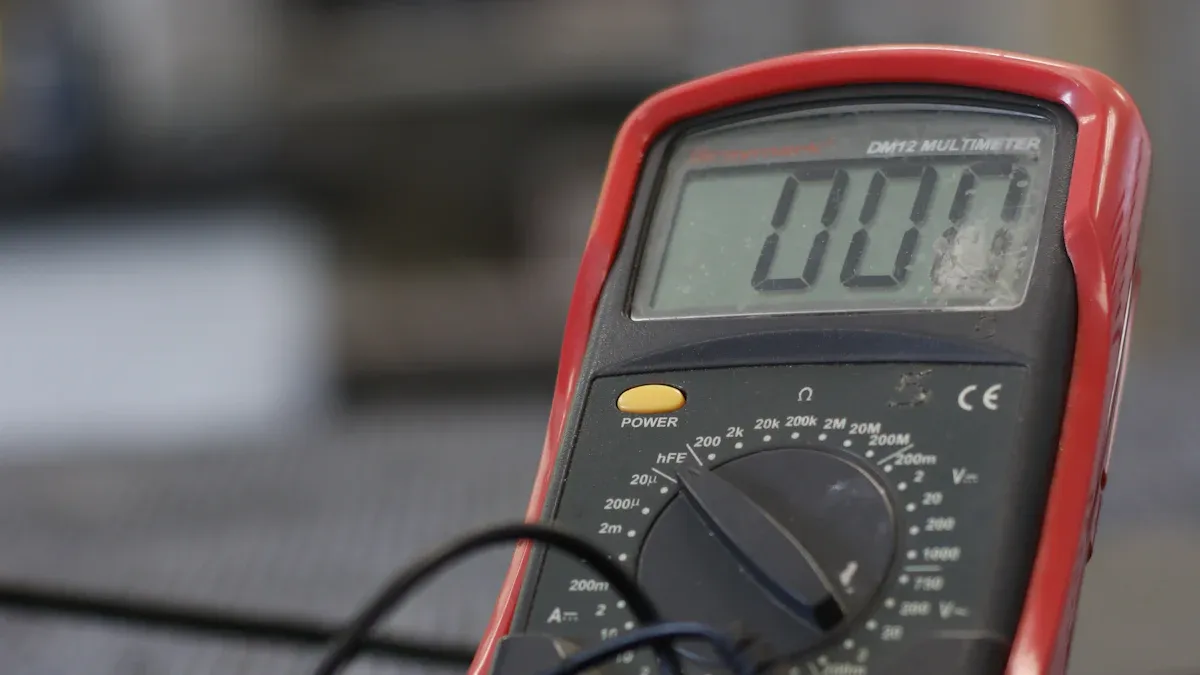
Using a voltmeter is important when you test a generator. You need to check the AC voltage at the outlets. Plug the voltmeter into the generator and turn it on. Look at the number on the screen. The voltage should match the generator’s rating, like 120V or 240V.
If lights flicker or the voltage jumps, the generator may have AVR problems. Low voltage, under 100V, means the AVR is not giving enough power. High voltage, over 130V, means the AVR is sending too much power. If the voltage keeps changing, the AVR cannot keep it steady.
Voltage Reading Condition | Implication |
|---|---|
Flickering lights | Indicates potential AVR struggle |
Unstable voltage readings | Suggests AVR issues; may not match specifications |
Low voltage (below 100V) | Indicates insufficient excitation current from AVR |
High voltage (over 130V) | Suggests AVR failure, flooding system with power |
Fluctuating voltage | Indicates AVR cannot regulate properly |
Note: Always use a voltmeter with insulated probes. Never touch the terminals with bare hands. This keeps you safe while checking the output.
Industry rules say you should check the generator’s output with load, performance, and voltage tests. These tests help you know if the generator can handle power needs and stay safe.
You can use a simple motor test to check the generator. There are two main ways to do this. The first way does not need a voltmeter. Turn off the engine and take off the belt. Remove the two wires from the generator and keep them safe. Put a jumper between the two terminals. Connect the jumper to the brown wire on the fuse box. Touch the jumper between the two terminals. If nothing happens, the generator is dead. If you see a spark or movement, the generator is probably okay.
The second way uses a voltmeter. Keep the belt on. Remove the two wires from the generator and tape them off. Put a jumper between the two terminals. Connect the voltmeter. Start the engine and let it run fast. Watch the voltmeter. You should see at least 14V. Do not let the voltage go above 18V-20V. If you see these numbers, the generator passes the test.
Alert: Never let the generator run too fast during this test. High speed can damage the generator and cause runaway danger.
Always check the output again after the motor test. This makes sure the generator works under real use. If you see problems, stop and fix them before using the generator for backup power.
Pick the right load devices before you start. Load banks are best for testing. They help you see if your generator can handle real power needs. You can use space heaters, power tools, or other big appliances. Electrical engineers say load banks give steady and safe results.
Testing Purpose | Description |
|---|---|
Maintenance and Repair Verification | Load banks show if the generator works well after repairs. |
Installation Acceptance / Commissioning | Load testing checks if new systems work right and finds cooling, fuel, or exhaust problems. |
Code Compliance Verification | Regular load testing meets NFPA codes and keeps emergency power systems ready. |
A load bank is very important. It helps you know if your backup power will work when you need it.
Think about your generator’s size. The table below shows how many watts you need for each size:
Generator Size | Recommended Wattage Range |
|---|---|
Small | 2,000-4,000 watts |
Medium | 5,000-8,500 watts |
Large | 10,000+ watts |
Make sure you have enough space and good airflow. High heat and bad ventilation can make the generator overheat. Keep things that can catch fire away from the test area.
Follow each step to do a load test safely. This helps you get good results. Here is a guide that many generator makers suggest:
Check all fluids. Make sure the fuel tank is full and the oil is right.
Start the generator. Let it warm up. Listen for strange sounds or look for leaks.
Connect your load devices. Begin with the biggest loads, like 200-volt appliances. Add smaller 110-volt loads until each side has half the total load.
Use a clamp-on ammeter to check current on each leg. Make sure the voltage stays safe.
Watch the generator during the test. Listen for odd noises. If you see or hear anything wrong, stop the test.
After the test, take off the loads slowly. Let the generator run with a light load for about an hour.
Tip: Let the generator and load bank cool down for five minutes after the test. This helps stop damage.
Check the generator’s main parts during the test. Look at the stator, rotor, and bearings. Make sure all connections are tight. Good power protection keeps your system safe.
After the load test, look at the results. This helps you know if your generator is ready for emergencies. Some problems can show up during load tests:
Wet stacking: Unburned fuel builds up if the generator runs at low loads too long.
Fuel contamination: Water or dirt in the fuel can make the engine run badly.
Voltage fluctuations: Bad regulators or damaged alternator windings can cause unstable power.
Overheating: Blocked airflow or a small radiator can make the generator too hot.
Emissions failures: Poor combustion can make the generator fail emissions tests.
Check key performance numbers too. The table below shows what to look for:
Metric | Description |
|---|---|
Response Times | How fast the generator reacts to power needs. |
Throughput | How much power the generator can give at one time. |
Resource Usage | How much fuel, CPU, and memory the generator uses. |
Other things to check are error rates, network latency, and requests per second if you use the generator for special equipment.
Note: Write down all your results. If you find problems, fix them before you use the generator for backup power.
Doing a load test helps you find problems early. It keeps your generator ready for emergencies and helps you follow safety rules. Regular testing also helps you avoid expensive repairs and downtime.
If your generator will not start, you can follow a step-by-step process to find the problem. Service manuals recommend these checks:
Look at the inside and outside of the generator for anything unusual.
Check the engine oil level. Low oil can stop the engine from starting.
Inspect the battery. Make sure the connection is tight and the polarity is correct.
Examine the circuit breaker, fuse, and controller. Replace any broken parts.
Check the fuel system. Make sure fuel is reaching the engine and the settings match the fuel type.
Use basic tests:
Try to crank the engine.
See if the engine starts.
Check for voltage at the outlets.
Measure the frequency.
Look for low oil pressure or high engine temperature.
Watch for strange engine behavior.
Finish by checking the battery, fuel, electrical controls, and physical condition. Run a load test if possible.
Tip: Write down each step you take. This helps you remember what you checked and spot patterns if the problem happens again.
Unstable power can damage your devices. You need to find the cause quickly. The most common reasons include:
The engine does not run smoothly. If you hear odd sounds or the engine speed drops below 3,200 rpm, the voltage may jump or drop.
The governor may not work right. The governor controls fuel flow. If it fails, the generator cannot keep a steady output.
You can fix some issues by cleaning or adjusting parts. If the problem continues, ask a technician for help.
Sometimes, fixing a used generator does not make sense. You should consider moving on if you notice:
No record of regular service or repairs.
Signs of heavy wear, damage, or rust after a close look.
Poor performance during a load test or strange noises.
Repairs cost more than buying a new generator.
The generator uses more fuel than before for the same job.
It starts slowly, runs rough, or loses power often.
If you see several of these signs, replacing the generator may save you time and money.
You can check a generator easily if you follow some simple steps: First, look at the generator to see if there is any damage or leaks. Next, test the generator with different loads and listen for strange sounds. Then, check the voltage and frequency to see if the output is steady. Do the tests again to make sure the results are the same each time.
Always follow a safety checklist:
Check every part of the generator
Make sure there is enough fuel and oil
Wear ear protection
Keep the area dry and let air move
Reliability Factor | Description |
|---|---|
Regular Testing | Doing load tests and keeping records helps you trust your generator. |
Be careful and keep your generator ready for when you need it.
Test your generator once every year. If you use it a lot, check it every 200 hours. Regular tests help you find problems early. This keeps your generator ready for emergencies.
Wear insulated gloves and safety goggles. Use ear protection to block loud sounds. These items keep you safe from electric shock and flying pieces. Always have a fire extinguisher close for extra safety.
Never test a generator inside. Generators make carbon monoxide gas. This gas is deadly in closed rooms. Always test your generator outside with good airflow.
Unstable voltage means the generator cannot keep steady power. This can hurt your devices. Check the automatic voltage regulator and all connections. Look for voltage that jumps or drops.
If your generator fails the load test, stop using it. Look for fuel problems or loose wires. Check for broken parts. Fix any issues before you test again. If problems do not go away, ask a professional for help.

