
T: 0086 13510078491
Tianraobu Village, Hengli Town, Dongguan City, Guangdong Province, 523472, China.
Views: 0 Author: Site Editor Publish Time: 2025-12-02 Origin: Site


Generator Type | Average Gas Usage Rate |
|---|---|
2000W Portable | N/A |
5000W Standby | 0.75 to 0.8 gallons per hour |
7kW Natural Gas | 115 to 118 cubic feet per hour |
You can use these numbers to estimate your costs and plan your backup power.
How much gas a generator uses depends on its type and size. A 5000W standby generator uses about 0.75 to 0.8 gallons each hour.
Pick a generator size that fits what you need. Using a generator at 70% to 80% of its power saves gas. It also helps the generator last longer.
Natural gas generators are cleaner and quieter than gasoline ones. They hook up to your home’s gas line. This means you do not need to store extra fuel.
Doing regular maintenance helps your generator work well. Change the oil and clean the filters often. This helps the generator use less fuel.
Think about your power needs before you buy. Knowing how much gas your appliances use helps you guess fuel costs. This way, you will not be surprised later.
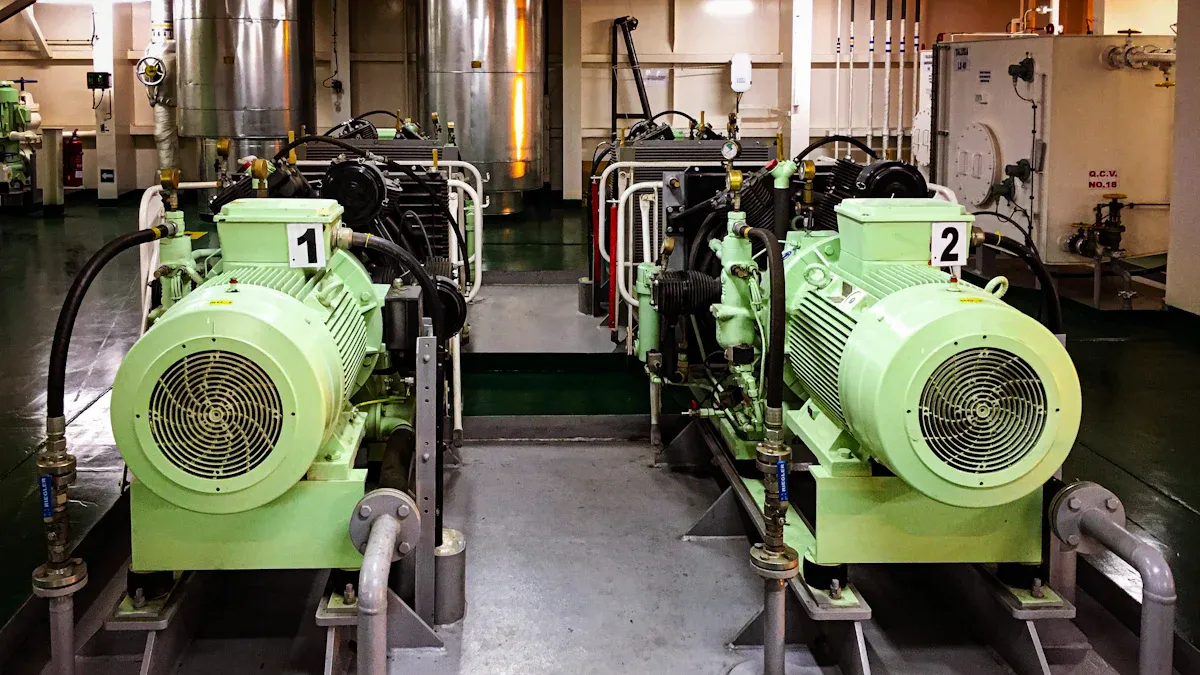
People use portable generators for camping or backup power. These generators are easy to move and set up. If you want to know how much gas they use, the answer is simple. Most 2000W to 5000W models use between 0.3 and 0.75 gallons each hour. The amount depends on how much power you use. If you run a 5000W generator at full power, it uses about 0.75 gallons every hour. If you use less power, it burns less gas.
Here’s a quick look at portable generator fuel use for different sizes:
Generator Wattage | Hourly Gas Usage (Gallons) |
|---|---|
2,000 watts | 0.3 - 0.4 |
3,500 watts | 0.5 |
5,000 watts | 0.75 |
Tip: Portable generators need you to add gas by hand. Always keep extra gas ready if you want to use your generator for a long time.
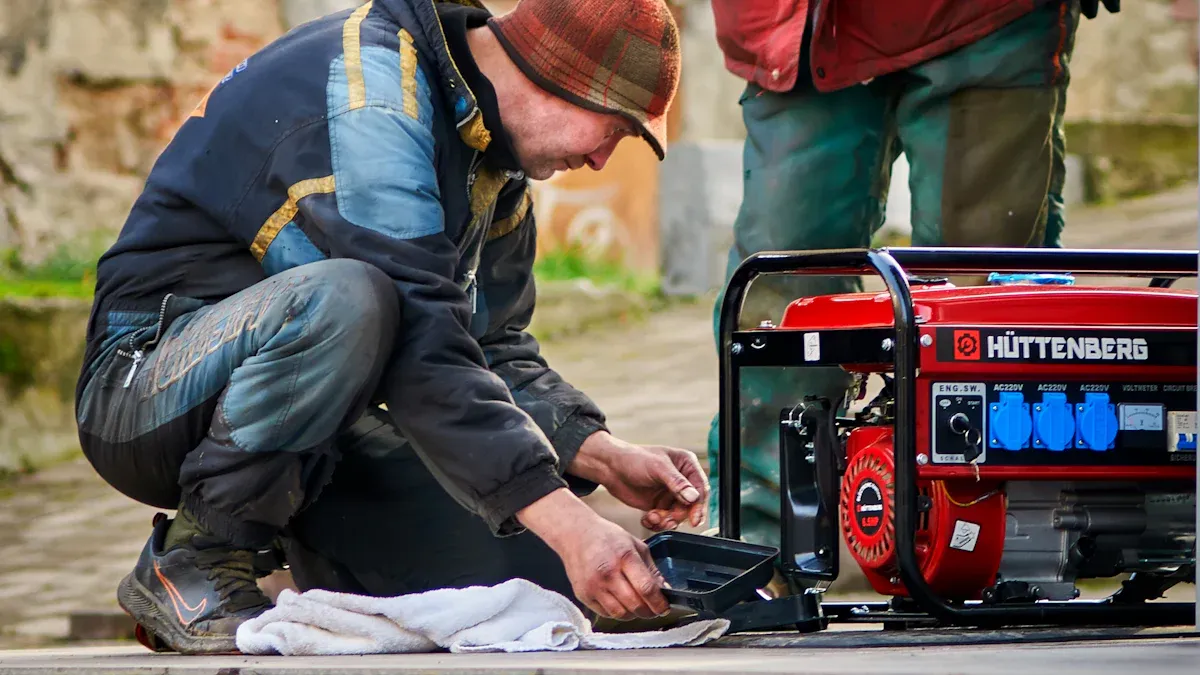
Portable generators use gasoline. You will need to refill the tank every few hours, especially if the power is out for a long time. The amount of gas you use depends on what you plug in. If you only run a fridge, lights, and a TV, you use less gas than if you run big tools.
Standby generators are different from portable ones. You put them outside your house, and they turn on by themselves when the power goes out. These generators can use gasoline, propane, or natural gas. How much gas a standby generator uses depends on its size and the type of fuel.
Here’s a table that shows average gas use for common standby generator sizes:
Wattage Range | Average Gas Consumption (gallons per hour) |
|---|---|
5,000-7,500 W | 0.4 - 0.9 |
8,000-12,000 W | 0.6 - 1.2 |
Gasoline standby | 0.8 - 1.6+ |
Standby generators can power your whole house. You do not need to add fuel as often as with portable generators. If you use a propane generator, you can run it for days or weeks on a full tank. Natural gas standby generators connect to your home’s gas line, so you do not have to worry about running out of fuel.
Note: Standby generators work better for long power outages. They help you feel safe when the power is out for a long time.
Natural gas generators are popular for homes and businesses. They are quiet and make less pollution than gasoline or diesel generators. If you want to know how much gas a natural gas generator uses, look at how many cubic feet it burns each hour.
Here’s a table that shows how much fuel natural gas and propane generators use at different loads:
Fuel Type | Load Condition | Consumption (ft⊃3;/hr) | Consumption (m³/hr) |
|---|---|---|---|
Natural Gas | 1/2 Load | 228 | 6.46 |
Natural Gas | Full Load | 327 | 9.26 |
Liquid Propane | 1/2 Load | 92 | 2.53 |
Liquid Propane | Full Load | 142 | 3.90 |
Natural gas generators can run as long as you have gas. You do not need to store fuel. These generators are cleaner and quieter than gasoline models. Diesel generators give more power and last longer, but natural gas generators are better for the environment.
Diesel generators are good for tough jobs.
Gas generators are quieter and cleaner.
Diesel generators make more electricity from each gallon of fuel.
Propane generators are also efficient and can run for a long time.
If you want to use less gas, pick a generator that fits your needs. Always check how much gas it uses before you buy. This helps you plan for fuel costs and makes sure you have enough power when the lights go out.
When you ask about gas use, size is not the only thing that matters. Many things can change how much gas a generator uses. Weather and where you live are important. If you use your generator high up in the mountains, the air is thinner. This makes the engine work harder and use more gas. Hot or cold weather also changes how much gas you need. In hot weather, the generator may not get enough oxygen, so it burns more fuel. Cold weather can make the fuel thick and hard to use. Humidity is important too. When the air is wet, the generator gets less oxygen and needs more gas.
Here’s a quick table that shows how these things change gas use:
Factor | Impact on Gas Usage |
|---|---|
Altitude | Reduces air density, affecting combustion efficiency and increasing overheating risk. |
Temperature | High temperatures limit oxygen for combustion; low temperatures can cause fuel issues. |
Humidity | High humidity displaces oxygen, impairing combustion efficiency. |
Tip: If you live where the weather is extreme or you are high up, check your generator’s manual for special rules.
A bigger generator is not always better. If your generator is too big for what you need, you waste gas. The burn rate goes up, and you spend more money. The best way to save gas and money is to use your generator at about 70% to 80% of its power. This helps you use less gas and keeps your generator working longer. If you only need to run a few things, pick a smaller generator. If you need to power your whole house, choose a size that fits your needs.
The kind of fuel you use changes how much gas your generator needs. Diesel generators use less gas and give you more energy for your money. They last longer and do not need as much fixing. Gasoline generators are easy to find, but they use more gas and need more care. Natural gas generators are clean and safe, but you cannot get natural gas everywhere.
Here’s a table to help you see the differences in fuel types:
Fuel Type | Efficiency | Availability | Maintenance | Lifespan | Safety | Environmental Impact |
|---|---|---|---|---|---|---|
Diesel | Higher efficiency, more energy per dollar | Widely available, but delivery can be affected by weather | Less expensive maintenance | Can last decades with regular maintenance | Less flammable, lower fire risk | Produces higher pollutants, but newer units are cleaner |
Gas | Lower efficiency, less energy per dollar | Available in populated areas, but may not be in remote areas | Higher maintenance costs | Shorter lifespan than diesel | Extremely flammable | Emits lower levels of pollutants than diesel. |
If you want to know how much gas your generator needs, look at the burn rate, the size, and the fuel type. Always check how much gas your generator uses each hour before you buy. This helps you plan for how much gas you need and keeps your costs under control.
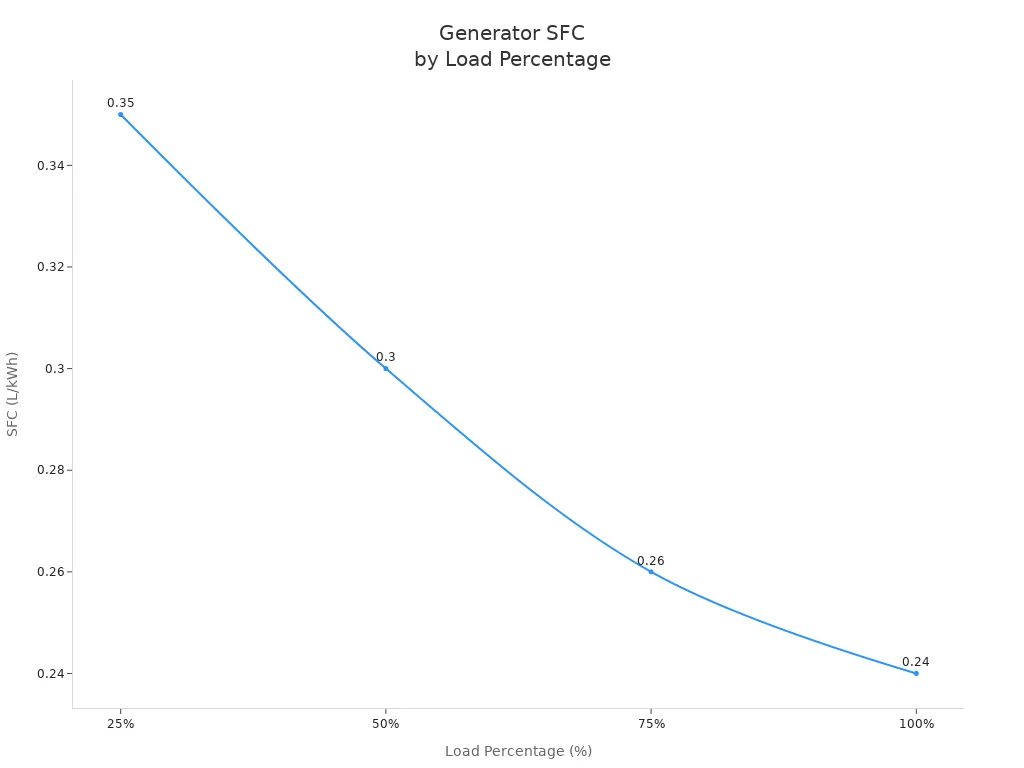
If you want to know how much gas your generator uses, you can use a simple math formula. First, find out how much power your generator makes in kilowatts. Then, multiply that number by the fuel consumption rate for your fuel type. This rate changes based on how hard your generator is working. If you use more load, the generator uses less fuel for each unit of electricity. The burn rate goes down when you use more of the generator’s power. Look at this table to see how the fuel rate drops as the load gets higher:
Load % | SFC (L/kWh) |
|---|---|
25% | 0.35 |
50% | 0.30 |
75% | 0.26 |
100% | 0.24 |
When you run your generator close to full power, you use less fuel for each kilowatt-hour. The burn rate is lower at higher loads.
Here is an easy way to figure out fuel use for different generator types:
Generator Type | Calculation Method | Fuel Consumption Unit |
|---|---|---|
Diesel/Propane | (Generator Output in kW) × (Fuel Consumption Rate) | gallons per hour |
Natural Gas | (Generator Output in kW) × (Fuel Consumption Rate) | cubic feet per hour |
Tip: Always look in your generator’s manual for the right fuel rate. This helps you plan how much fuel you need so you do not run out during a power outage.
Let’s try an example. Say you have a 5000W generator and you use it at half power. You want to know how much natural gas you will use in one hour. Here are the steps:
Step | Calculation | Result |
|---|---|---|
1 | Fuel Consumption Per Hour = Max. Wattage × Load × 7.43 Cubic Feet Of Natural Gas ÷ 1,000 | 22.29 Cubic Feet Of Natural Gas |
2 | 5,000W × 0.5 × 7.43 ÷ 1,000 | 18.65 Cubic Feet Of Natural Gas |
3 | Running Cost = Quantity Of Gas Consumed (in ft⊃3;) × Price Of Natural Gas (in 1,000 ft⊃3;) ÷ 1,000 | $0.20 per hour |
If you use a diesel generator, you measure fuel in gallons per hour. For example, a 20 kW diesel generator uses about 2 gallons every hour. A propane generator uses almost the same formula, and you also measure in gallons per hour.
You can also compare a 2000W portable generator and a 7kW natural gas generator. The portable one uses about 0.75 gallons each hour. The natural gas generator burns between 115 and 118 cubic feet every hour.
When you use a generator to power things in your house, you need to know how much gas each thing uses. This helps you plan how much fuel you need and how much it will cost. Here is a table that shows the average gas use for common appliances:
Appliance | Typical Power (Watts) | Estimated Gas Usage (per hour) |
|---|---|---|
Refrigerator | 150-400 | 0.03 - 0.08 gallons |
Gas Dryer | 200-400 | 0.02 - 0.06 gallons |
Microwave | 800-1200 | 0.12 - 0.18 gallons |
TV | 50-200 | 0.01 - 0.04 gallons |
Lights (10 bulbs) | 60-100 | 0.01 - 0.02 gallons |
Gas dryers usually use between 100 and 500 watts. Most dryers use 200 to 400 watts.
Knowing how much power your appliances need helps you figure out fuel use and avoid surprises.
Note: If you use more than one appliance at the same time, add up their wattages. This gives you the total load for your generator. Then you can use the formula above to find out how much fuel you need.
The kind of generator you pick—diesel generator, natural gas generator, propane generator, or gasoline generator—changes how much gas you use. If you want to save money, choose appliances that use less power and try to run your generator at a steady load.
If you follow these steps, you can figure out fuel use for any generator and plan how much fuel you need and how much it will cost. This makes it easier to keep your generator running and your house powered during a blackout.
You might wonder how much it costs to use a generator. In 2025, the price depends on fuel and how much power you use. A 5000W standby generator costs about $3 each hour. Some people pay as little as $2 per hour. Others might pay up to $5 for every hour. If you run your generator all day, it costs $72 to $120. Natural gas prices are going up. They may reach $4.20 in 2026. This means using a natural gas generator will cost more. Your electricity bills could get higher.
Hourly cost for 5000W standby generator: $2–$5
Daily cost (24 hours): $72–$120
Natural gas prices are going up, so expect higher costs
You can pick from many types of generators. Each one costs a different amount. Here’s a table to help you compare:
Generator Type | Purchase Price Range | Installation Cost Range | Ongoing Costs |
|---|---|---|---|
Natural Gas | $3,649 - $15,000+ | $3,000 - $10,000+ | Natural gas bill + maintenance |
Large Portable | $800 - $2,000 | N/A | Fuel cost + basic maintenance |
ERAYAK 4500PD | N/A | N/A | Dual-fuel, inverter, portable |
Some portable generators can use two kinds of fuel. Some have inverter technology and electric start. These features help you save money. They also make your generator easier to use.
You can spend less on fuel if you follow some easy steps:
Do regular maintenance like changing oil and cleaning air filters.
Use good fuel and do not use old gas.
Watch what you plug in. Do not overload your generator. Spread out your power use.
Choose a generator with inverter technology. It saves fuel and is quieter.
Put your generator in a cool, open place on flat ground.
Tip: If you do these things, you will use less fuel and your generator will work better.
If you plan ahead and use these tips, you can control your generator costs. You will have power when you need it.
You will see natural gas generators use more fuel in 2025. In the U.S., people will use over 91 billion cubic feet each day. The cost to run a generator is about $0.08 to $0.15 for each kilowatt-hour. Always check your local prices before you use your generator. You can save gas by using AI tools. These tools help you find waste and balance your power use. Pick a generator that matches your needs and your budget. Natural gas generators give clean power and steady fuel. Make a plan for emergencies, building projects, or events. This helps you keep your power working and your costs low.
Most portable generators work for 8 to 12 hours on one tank. If you use less power, the generator will last longer. Always look in your generator’s manual for the exact time.
Yes, most portable generators can use regular gasoline. Make sure the gasoline is new and not old. Old gasoline can make your generator work badly.
If you plug in too many things, your generator might turn off. It can also get damaged if you use too much power. Always check how many watts your appliances use and do not go over the limit.
No, never use a generator inside your house. Generators make carbon monoxide, which is very dangerous. Always use your generator outside where air can move around.
Put gas in special containers made for fuel. Keep them in a cool, dry place away from the sun. Never keep gas inside your house. Always write labels on the containers so you know what is inside.

